Ford Transmission Park Issue: Ford Recall Covers 741,195 Vehicles Over Rollaway Risk
 AND Editorial Team
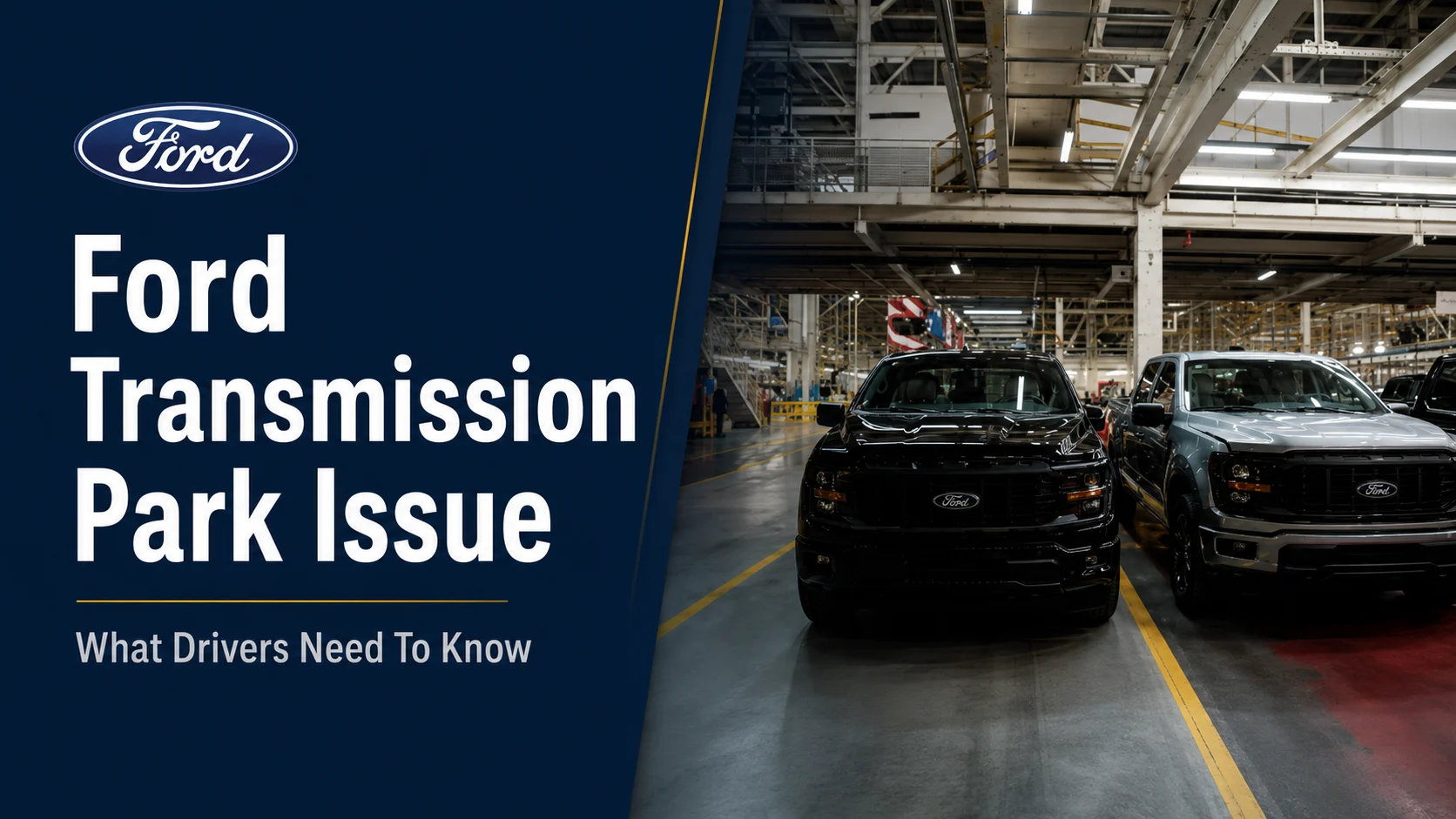
Ford faces a large safety recall because of a transmission park issue. The National Highway Traffic Safety Administration recall report says Ford recalls 741,195 vehicles. The report lists the recall number as 26V402 and the Ford recall number as 26S48. It also says Ford estimates that 1% of the recall population has the defect.
The problem involves the transmission parking pawl. This part helps hold a vehicle in Park. The NHTSA report says affected vehicles may see temporary engagement of the parking pawl while the vehicle is in motion. That can damage park system parts.
This is why the Ford transmission park issue matters. The main danger is not only a warning light. The real danger comes later if the damaged park system fails to hold the vehicle after the driver selects Park. The recall now becomes one of Ford’s biggest safety stories of 2026.
The Ford recall covers 5 model groups. The NHTSA report lists 82,570 Ford F-150 vehicles from the 2021 model year. It lists 313,147 Ford Explorer vehicles from model years 2020-2021. It also lists 246,202 Ford Expedition vehicles from model years 2018-2021.
The Lincoln side also has large numbers. The report lists 40,197 Lincoln Aviator vehicles from model years 2020-2021. It also lists 59,079 Lincoln Navigator vehicles from model years 2018-2021. This means SUVs make up most of the recall population.
The Explorer alone accounts for more than 313,000 vehicles. The Expedition adds more than 246,000 vehicles. Together, those 2 Ford SUVs make up more than 559,000 of the 741,195 recalled vehicles. That is a key number for readers. This recall is not only an F-150 story. It is mainly a large SUV and truck recall.
The Ford transmission park issue starts inside the transmission control system. The NHTSA report says the vehicle’s transmission valve body separator plate may limit flow to the park valve. This can cause temporary park pawl engagement when certain shifts are commanded.
In simple terms, the park system can get hit at the wrong time.
The vehicle may not fully shift into Park later if that damage occurs. The NHTSA report says the transmission park feature may not hold the vehicle if the parking brake is not applied. It also says unintended movement in Park increases the risk of a crash or injury.
This point is important because many headlines say the vehicle “shifts into Park while moving.” That can confuse readers. The better explanation is this. The parking pawl can temporarily engage during certain shift events. That can damage the parking system. The damaged system may then fail to hold the vehicle in Park.
Also Read: Trump Housing Bill Dispute
Ford says drivers may see a warning before or during the issue. The NHTSA report says customers will receive a wrench light in the instrument panel cluster. It also says the electronic parking brake can automatically apply if the transmission range sensor does not reach the Park position when Park is commanded.
This gives drivers 2 important clues: First, a wrench light can appear. Second, the electronic parking brake may apply on its own in some cases.
But drivers should not ignore the warning. A warning light means the vehicle needs attention. It does not mean the issue is harmless.
The report also explains a limit in the backup system. It says affected vehicles have rollaway detection. But it also says the Powertrain Control Module may not be awake in some cases after the vehicle powers down. In those cases, it may not detect movement.
This is the part many reports miss. The vehicle has a backup safety strategy, but the backup may not work in every parked condition.
Ford’s report includes real-world claims linked to the issue.
The NHTSA report says the investigation starts after NHTSA contacts Ford on April 6, 2026. NHTSA points to 11 Vehicle Owner Questionnaires on 9 vehicles. These reports mention vehicle movement after shifting to Park, inability to shift into Park, a vehicle stuck in Park, or movement with the brake applied.
The report says Ford later reviews more claims during April and May 2026. By May 20, Ford identifies 220 Ford reports in North America and 10 VOQs linked to 2020-2021 Explorer and Aviator vehicles. It also identifies 62 Ford reports and 3 VOQs linked to 2018-2021 Expedition and Navigator vehicles.
The injury and damage numbers matter. Ford says it is aware of 24 allegations of property damage and 9 alleged injuries. The injury count includes 2 emotional injury claims. These numbers show why the issue moves from complaint review to recall action.
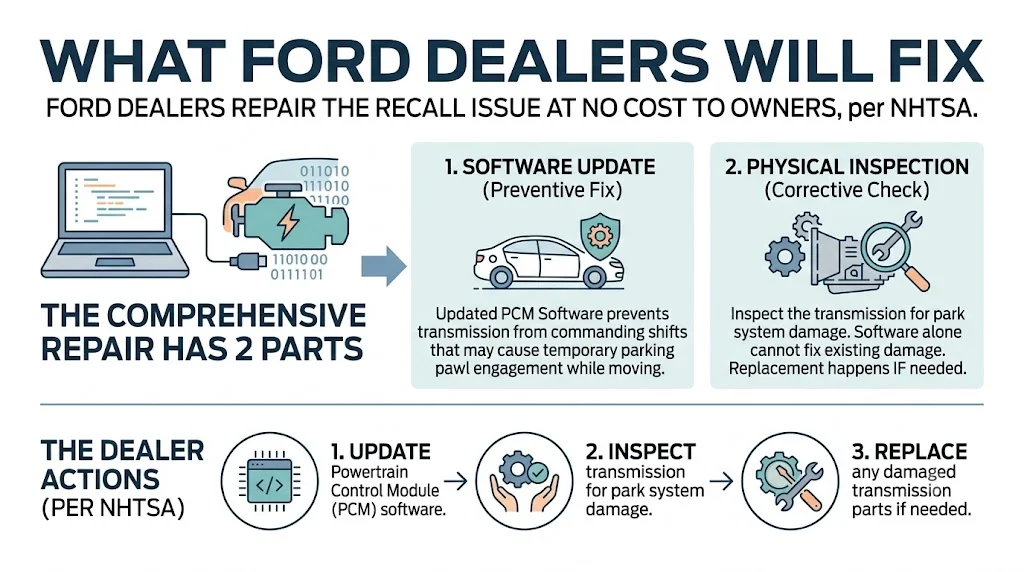
Ford dealers will repair the recall issue at no cost to owners. The NHTSA report says dealers will perform the following actions:
The software fix has a clear job. The updated PCM software prevents the transmission from commanding shifts that may cause temporary parking pawl engagement while the vehicle is moving. That means the repair has 2 parts:
This is important because a software update alone may not help if the park system already has damage. That is why inspection matters.
The recall timeline stretches across 2026 and 2027. The NHTSA report says Ford expects dealer notification on June 26, 2026. It also says interim owner notification letters are expected from August 3, 2026, to August 7, 2026.
The full remedy notice comes later. The report says remedy owner notification letters are expected in phases during the second quarter of 2027. It lists April 5, 2027, to April 9, 2027, as the planned remedy owner notification window.
That timing matters for owners. Some owners may receive notice in 2026 before the final remedy process reaches them. Owners should not wait only for mail if they see warning lights or park problems. They can check with Ford or a Ford or Lincoln dealer. The report also says VINs are planned to be searchable from June 26, 2026.
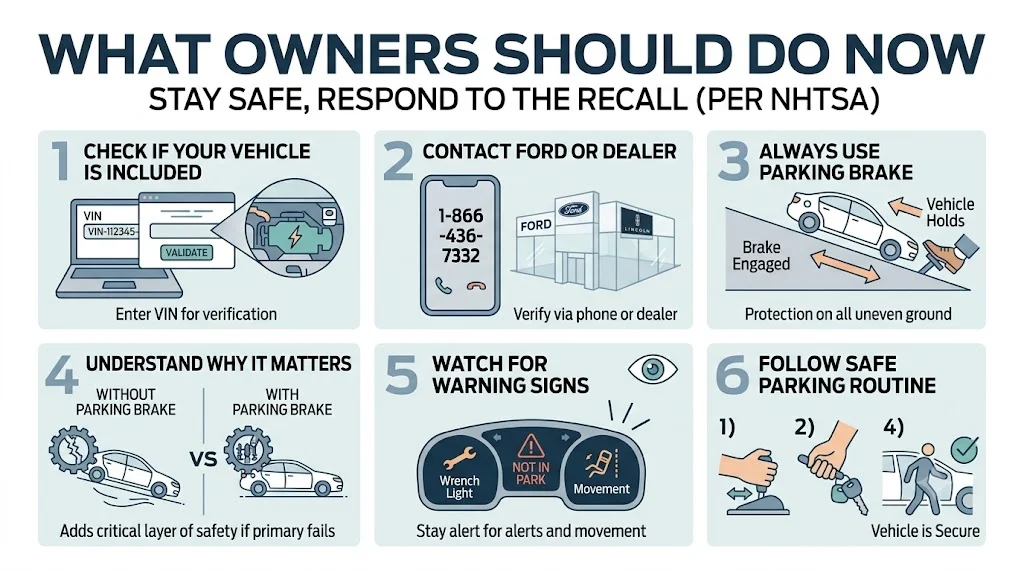
Owners should follow these steps to stay safe and respond to the Ford recall:
Many articles explain that Ford recalls more than 741,000 vehicles. That number matters. But the deeper story sits in the design.
This Ford recall is not just a normal gear shifter problem. The affected vehicles use electronic park-by-wire systems and modern transmission controls. The NHTSA report says the affected F-150, Expedition, and Navigator vehicles use 10R80 transmissions. It also lists 10R60 or 10R80MHT transmissions for Explorer and Aviator models.
That changes the public safety lesson.
Older vehicles often use more direct mechanical links. Newer vehicles rely more on software, sensors, and control modules. When those systems work well, they make driving smoother. When a defect appears, the fix may need both software and hardware checks.
This is why Ford’s repair plan includes a PCM software update and a physical transmission inspection. The problem sits between software commands and mechanical park parts.
That is the unique angle. The Ford transmission park issue shows how modern vehicle safety now depends on both code and metal.
The recall gets attention because rollaway risk is easy to understand. A parked vehicle should stay parked. If a truck or SUV moves after the driver exits, it can hit another vehicle, a garage, a wall, a person, or the driver. The risk becomes worse if the vehicle sits on a slope.
The scale also matters. The recall covers 741,195 vehicles. It includes popular family SUVs and one of America’s best-known trucks, the F-150. Reuters reports that the affected vehicles include certain 2018-2021 Navigator and Expedition models, 2020-2021 Explorer and Aviator models, and 2021 F-150 vehicles.
The injury and property damage claims add weight. AP reports that Ford receives 24 property damage reports and 9 injury reports linked to the defect. That is why the recall matters beyond car forums. It affects families, workers, businesses, and fleet owners.
Many people search for Ford F-150 transmission park problems because the F-150 is a high-profile truck. But the recall data shows a wider issue.
The F-150 count is 82,570 vehicles. The Ford Explorer count is 313,147 vehicles. The Ford Expedition count is 246,202 vehicles. The Lincoln Navigator count is 59,079 vehicles. The Lincoln Aviator count is 40,197 vehicles. This means the Ford recall affects more SUVs than pickups.
That detail matters for families because Explorer, Expedition, Aviator, and Navigator models often carry children, passengers, and luggage. A rollaway risk in these vehicles can create a serious safety concern in driveways, school drop-offs, parking lots, and garages.So owners should not assume this recall applies only to work trucks. It also applies to family SUVs.
Ford now moves through the recall process. Dealers receive notice first. Owners receive interim letters in August 2026. Ford then sends remedy letters in phases in the second quarter of 2027.
During that time, owners can check their VIN and contact Ford or a dealer. If a driver sees a warning light or feels the vehicle does not hold in Park, they should schedule service.
The repair is free. The dealer updates software, checks the transmission park system, and replaces damaged transmission parts if needed.
This recall also gives owners one clear habit to follow. Use the parking brake every time. That step matters even more while recall work is pending.
The Ford transmission park issue now becomes a reminder that a vehicle’s Park setting is not the only safety layer. The parking brake still matters, especially when a known recall involves the park system.