Iranian Asylum Seekers In USA Face New Data Privacy Fight After Lawsuit Says U.S. Shared Information With Iran
 AND Editorial Team
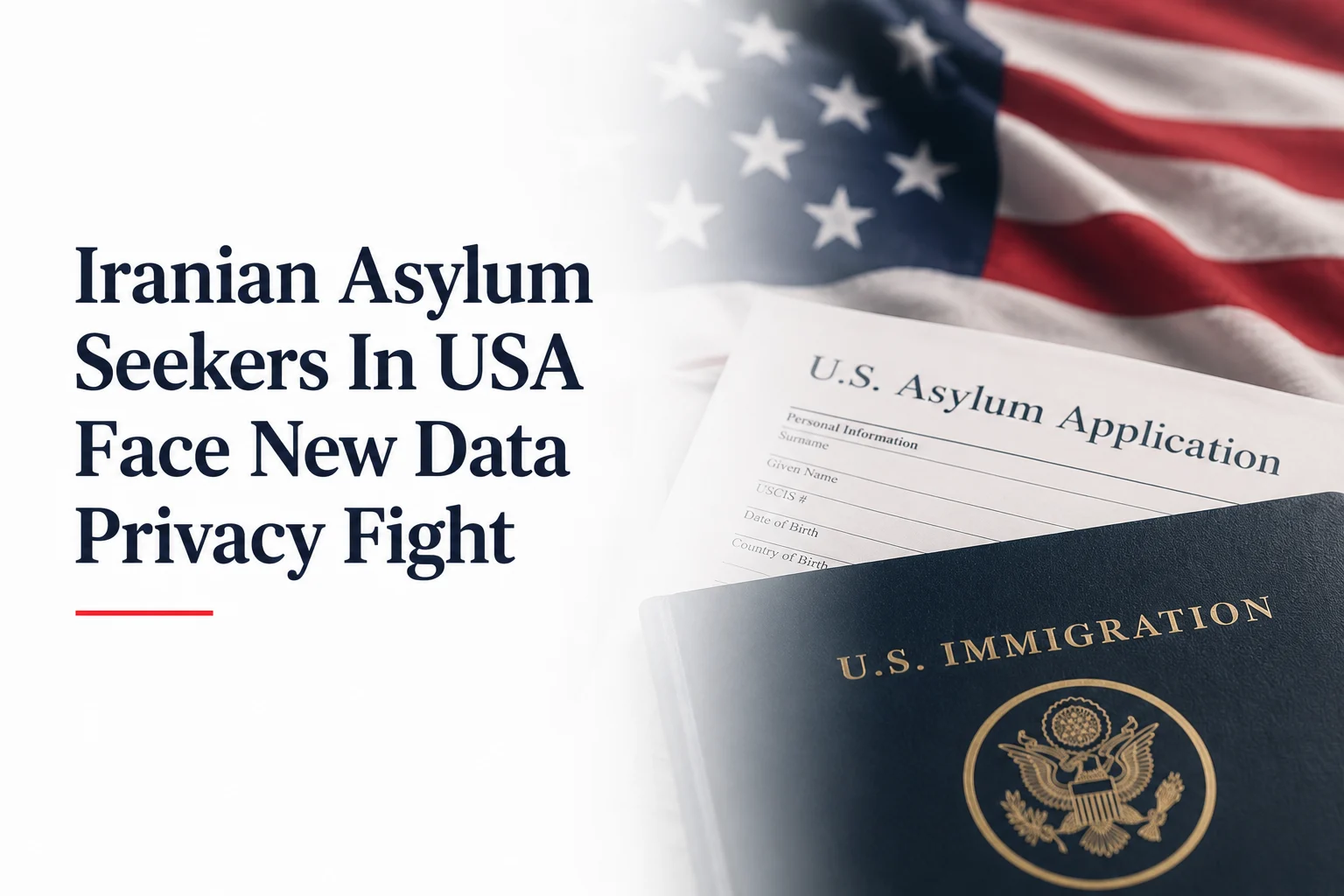
Iranian asylum seekers in the USA are now at the center of a serious data privacy fight. A lawsuit filed on July 7, 2026 says U.S. immigration agencies under the Trump administration shared confidential information about Iranian asylum seekers with Iran. The lawsuit says this information includes sensitive asylum details that may expose people to danger if they return to Iran. AP reports that the lawsuit is brought by the Iranian American Legal Defense Fund and Public Citizen Litigation Group.
The case is important because asylum claims often include the most private details of a person’s life. An Iranian applicant may describe political activity, religion, sexuality, protest history, family ties, or fear of government punishment. If those details reach the same government the person fears, the asylum process itself can become dangerous.
Also Read:
The lawsuit says U.S. officials shared confidential immigration information with Iran during deportation talks. Reuters reports that the lawsuit alleges the practice affects Iranian asylum seekers such as pro-democracy protesters, Evangelical Christians, religious minorities, and LGBTQ people. These groups may face serious risk if Iranian officials learn the details of their asylum claims.
The lawsuit also says Iranian officials knew detailed information about some detainees’ asylum cases. Reuters reports that the case is filed in U.S. District Court for the District of Columbia and seeks an independent monitor to stop further disclosures.
This is the key issue for readers. The lawsuit does not only discuss deportation. It discusses whether private asylum details move from U.S. files to a foreign government.
The U.S. government denies the lawsuit’s main claim. Reuters reports that the Department of Homeland Security says allegations that ICE shared asylum application records with Iran are false. DHS also says ICE remains committed to the rights of asylum seekers and to consular access rules.
This denial matters. The lawsuit gives one side of the case. DHS gives the other side. A court must now review the claims, the records, and the legal rules. Readers should understand the current status clearly. This is an allegation in a lawsuit. It is not a final court ruling.
Asylum confidentiality is not a small paperwork rule. U.S. regulation 8 CFR 208.6 says information in or about an asylum application generally must not be disclosed without the applicant’s written consent, except in allowed situations. The rule covers asylum, refugee admission, withholding of removal, Convention Against Torture protection, credible fear records, and reasonable fear records.
This matters more in cases involving Iran because many applicants say they fear the Iranian state itself. An asylum file may contain a person’s political opinions. It may describe a protest role. It may identify a religious conversion. It may describe LGBTQ identity. It may name family members still in Iran. That is why privacy can become a safety issue.
Many articles mix two different groups. Iranian asylum seekers are people who ask the United States for protection because they say they fear persecution. Iranian Americans are a much larger and more established community.
Pew Research Center says there were about 750,000 Iranian Americans in the United States in 2024. Pew defines this group as people born in Iran, people with Iranian ancestry or race, and people with at least one Iranian parent.
This difference matters because public debate can become unfair. A lawsuit about detained asylum seekers should not become a broad attack on all Iranian Americans.
The Iranian American community includes students, doctors, engineers, business owners, workers, families, and long-settled immigrants. The asylum lawsuit focuses on a smaller group inside the immigration system.
Iranian asylum cases often involve claims that are hard to separate from personal identity. Some applicants claim political persecution. Some claim religious persecution. Some claim risk because of women’s rights activism, protest activity, LGBTQ identity, journalism, or criticism of the Iranian government.
USCIS says a person may apply for asylum if they are physically present in the United States or arrive in the United States and file Form I-589 within one year of arrival, unless an exception applies.
This is why the process requires trust. Applicants often must tell the U.S. government details that they would never safely tell Iranian officials. If applicants believe their information can reach Iran, they may avoid telling the full truth. That can hurt the asylum system and make it harder for officials to judge real fear.
The lawsuit appears during a tougher immigration enforcement period. AP reports that the lawsuit says the information sharing was used to pressure Iranian asylum seekers in ICE custody to return to Iran. AP also reports that ICE and DHS deny the claim and say they follow legal protocols for consular access and deportations.
This creates the main legal clash. The government says deportation requires coordination with foreign governments in some cases. A country may need to confirm identity or issue travel documents.
But asylum advocates say the government cannot share asylum details that place people at risk. They argue that identity checks must not expose political, religious, or personal protection claims. That is the narrow but important issue. Deportation processing and asylum confidentiality can collide.
The United States and Iran do not have normal direct diplomatic relations. Reuters reports that Iranian consular functions in the U.S. are performed by the Iranian Interest Section at the Embassy of Pakistan in Washington, D.C.
This detail matters because it explains how communication can happen even without normal U.S.-Iran embassy relations. The lawsuit says monthly meetings helped pass information to Iranian representatives. The government denies improper disclosure.
For readers, this is useful context. Even hostile governments can still have limited diplomatic channels for passports, travel documents, and deportation matters.
Critics say the alleged data sharing can put people in direct danger. The Washington Post summary says the court claim contends that information shared with Iran could jeopardize pro-democracy protesters, religious minorities, and LGBTQ people.
That risk is easy to understand. If a person tells the U.S. government that they oppose Tehran, convert to Christianity, support women’s rights protests, or identify as LGBTQ, that information can be dangerous inside Iran.
The unique angle is this: the harm may not wait until deportation. Family members in Iran can also face pressure if authorities learn the applicant’s claims.
The public reaction is divided. Some people say the United States should remove people who do not qualify for asylum. They argue that Iran is an adversary and that the U.S. should not accept many arrivals from a hostile country.
Others say this view ignores the reason asylum exists. Many Iranian asylum seekers say they flee the Iranian government, not support it.
That difference is important. A person can come from a country whose government opposes the United States and still fear that same government. The law does not grant asylum because a country is friendly or unfriendly. It looks at whether the individual faces persecution for protected reasons.
Readers who want to understand this issue should use official links, not only social media posts. The most useful official source is the USCIS asylum page. It explains who may apply for asylum and links to the process. The USCIS Form I-589 page explains the application used for asylum and withholding of removal.
The eCFR page for 8 CFR 208.6 explains the asylum confidentiality rule. It is the key legal rule in this privacy fight. These links help readers separate politics from process. The lawsuit is political in impact, but the legal fight depends on immigration regulations, privacy duties, and evidence.
Asylum approval numbers can confuse readers because different sources count different things. Some numbers count immigration court decisions. Some count affirmative asylum decisions. Some include pending cases. Some count global asylum claims by Iranians outside the United States.
This is why one article may show a high approval rate while another shows a lower one. Readers should check the source before comparing numbers. A U.S. immigration court dataset is not the same as a global asylum tracker. A 2019 approval rate is not the same as a 2024 or 2025 result.
The useful takeaway is simple. Iranian asylum cases can win in the United States, but the process is slow, complex, and different for each applicant.
This case matters beyond one nationality. If the court finds that asylum data was wrongly shared, the decision may affect how U.S. agencies handle asylum information for people from many countries.
The rule matters for Chinese dissidents, Russian war opponents, Afghan allies, Venezuelan activists, LGBTQ applicants, religious converts, journalists, and many others.
Asylum works only if applicants can safely tell the truth. If the government they fear gets the file, the whole protection system loses trust. That is why privacy is not a technical issue. It is part of protection.
The lawsuit now moves through federal court. The plaintiffs want the court to stop alleged disclosures and appoint an independent monitor. DHS denies that ICE shared asylum application records with Iran. The court will need to review evidence, agency actions, legal exceptions, and confidentiality rules. For Iranian asylum seekers, the next updates matter a lot.
The case may affect deportation talks, detention pressure, consular access, and the handling of private asylum files. It may also decide how much outside oversight federal agencies need when they deal with a foreign government accused of persecuting the same people seeking protection. The clearest point is this. Iranian asylum seekers in the USA are not only facing an immigration case. They are now part of a larger fight over privacy, safety, deportation, and trust in the U.S. asylum system.