Student Loan News: Trump Student Loan Overhaul Starts July 1 With New Repayment Rules
 AND Editorial Team
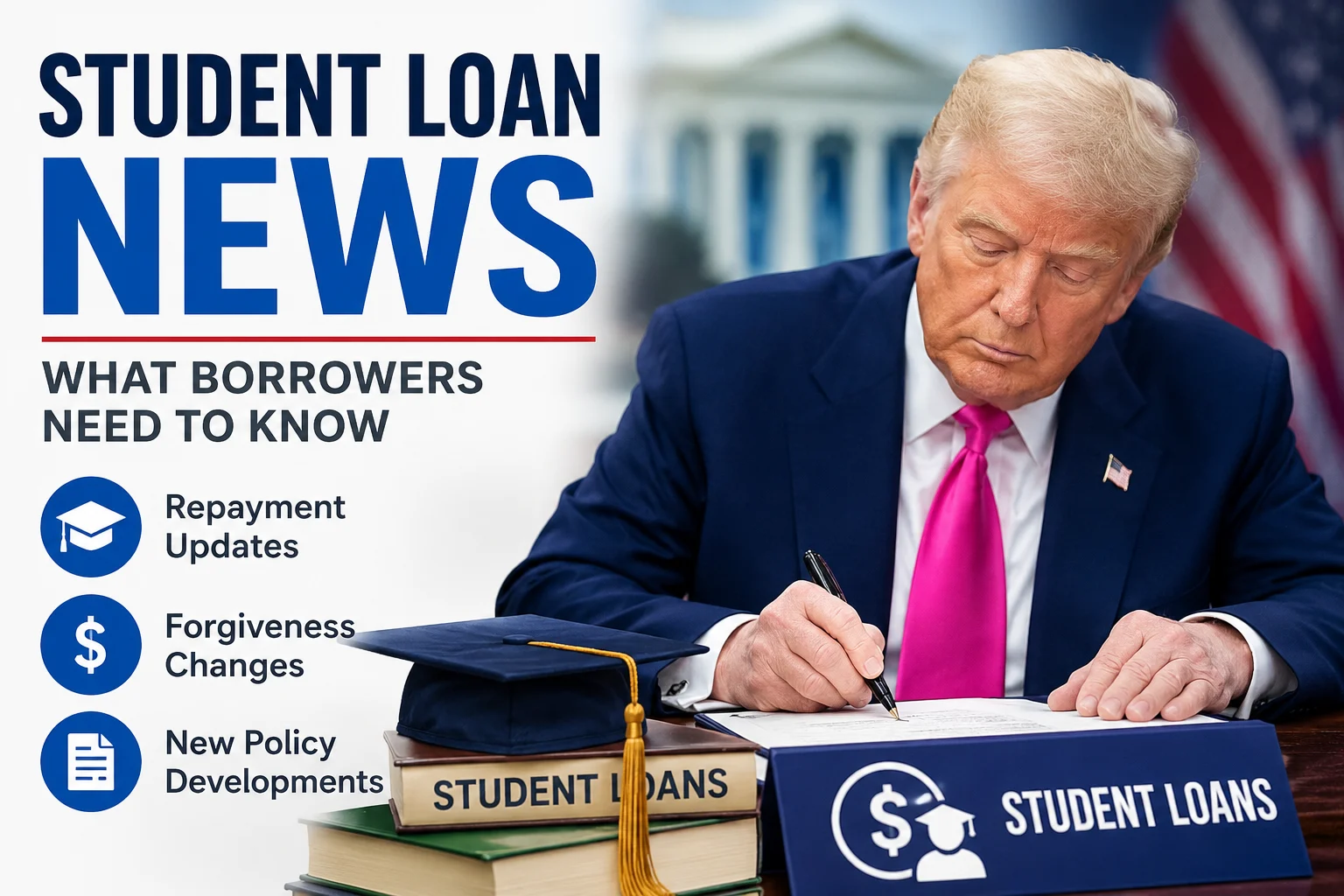
Major student loan news starts on July 1, 2026. The Trump administration launches a large student loan repayment overhaul. The Education Department says the new system adds the Repayment Assistance Plan and the Tiered Standard repayment plan. The department says these 2 plans aim to replace a confusing mix of repayment options for many borrowers.
The change does not hit every borrower in the same way. New borrowers face the biggest change. Borrowers who take new federal loans after July 1 must use the new plan structure in many cases. Current borrowers may still keep some old plans if they do not take new loans.
This is why the July 1 date matters. It does not mean every borrower must change plans on that exact day. It means the new system opens and loan servicers begin sending notices to affected borrowers.
The student loan news now centers on one question. Can borrowers understand the new rules before their monthly bill changes?
Also Read: Student Loan Repayment FAFSA Update
The new Repayment Assistance Plan is called RAP. RAP sets monthly payments based on income. The Education Department says RAP payments run between 1% and 10% of a borrower’s income. The exact rate depends on how much the borrower earns. The plan also reduces payments by $50 per month for each dependent.
RAP also has a long timeline. Borrowers can receive discharge if they still have a balance after 360 monthly on-time payments. That equals 30 years of payments.
The plan also adds 2 features that matter for borrowers who fear growing balances. The Education Department says RAP waives unpaid monthly interest when borrowers make full on-time payments. It also adds a matching principal payment of up to $50 per month if the borrower’s payment does not reduce principal by at least $50.
This is the main selling point of RAP. The government says borrowers should see their balances move down if they pay on time.
But borrowers still need to compare their numbers. A payment that looks lower for one family may look higher for another.
The Tiered Standard Plan gives borrowers fixed payments. The Education Department says the plan uses repayment terms of 10, 15, 20, or 25 years. The term depends on how much the borrower owes.
This is different from the old standard plan. The old standard plan often used a 10-year term. That could create a high monthly bill for borrowers with large balances.
The department gives one example. A borrower with a $30,000 initial loan balance would pay at least $341 per month under the old 10-year standard plan. Under the Tiered Standard Plan, the payment drops to $262 because the term can stretch to 15 years.
This helps monthly cash flow. But it can also keep borrowers in debt for more years. That is the trade-off. A longer term can lower the bill today. It can also keep interest running for longer. Borrowers should compare the monthly payment and the total repayment cost before they choose.
The biggest disruption hits SAVE borrowers. The Education Department says about 7.5 million borrowers enrolled in the SAVE Plan. The department says servicers begin sending notices on July 1. Borrowers then get at least 90 days to choose a legal repayment plan.
If borrowers do not act during their 90-day window, servicers can move them into the Standard Plan or the new Tiered Standard Plan.
That detail matters because the automatic plan may cost more each month. SAVE gave many borrowers lower payments. Some borrowers may now see a higher bill when they move to a new plan. Business Insider reports that some borrowers expect sharp increases. One borrower says her projected payment rises from $530 to $1,200.
Borrowers should not wait for social media advice. They should check their servicer notice. They should log in to StudentAid.gov. They should compare plans before the 90-day clock ends.
The new rules also change how much students can borrow. Graduate PLUS loans end for new borrowers. Investopedia reports that graduate students now rely on unsubsidized federal loans under the new limits. Professional students can borrow up to $50,000 per year and $200,000 total. Other graduate students can borrow up to $20,500 per year and $100,000 total.
CBS News also reports a larger lifetime cap. It says most borrowers face a $257,500 total federal loan cap across their education.
These numbers can change how students choose graduate school. A student in a lower-cost program may not feel much pain. A student in a high-cost law, medical, health, or professional program may need new funding.
This creates a new pressure point for colleges. Schools can no longer assume federal loans will cover every gap. They may need to cut costs, offer more aid, or create private loan partnerships.
The graduate loan limits also create a fight over which degrees count as “professional.”
Investopedia reports that a federal court forces the Education Department to temporarily expand the list of professional degrees before the July 1 rollout. The temporary list includes nursing, psychology, divinity, ministry, audiology, physical therapy, occupational therapy, and other programs.
This detail matters because the label changes the loan limit. A professional student can borrow up to $50,000 per year and $200,000 total. A non-professional graduate student can borrow only $20,500 per year and $100,000 total.
Nursing becomes a major example. Some health groups warn that lower borrowing limits can hurt the nursing pipeline. The Education Department says most nursing students will not feel the cap. CBS News reports that the department says 95% of nursing students will not be affected by the borrowing cap.
This fight shows a bigger issue. The student loan system now decides not only how much people repay. It also decides which careers get easier access to federal financing.
Parent PLUS loans also change. CBS News reports that Parent PLUS loans now carry a $20,000 annual cap and a $65,000 total cap per student. Before this change, parents could borrow up to the full cost of attendance.
This is a major change for families. Many parents use Parent PLUS loans to cover the gap after grants, scholarships, and student loans. That gap can include tuition, housing, books, and fees. The new cap forces families to plan earlier.
A family can no longer assume federal loans will cover the full cost. Parents may need to compare schools by net price. Students may need to choose cheaper housing. Families may need to consider community college, in-state schools, or transfer paths.
This is one of the biggest practical changes in the Trump student loan plan. It moves the cost conversation to the front of the college choice.
Borrowers also get one helpful change. The Education Department says federal student loan borrowers enrolled in auto pay can get a 1% interest rate reduction beginning July 1, 2026. Borrowers must enroll by September 30, 2026. The benefit runs through June 30, 2028.
Before this change, auto pay usually gave a 0.25% interest rate cut. The new benefit raises that cut to 1%. Borrowers who already use auto pay do not need to take extra action. Their servicer should apply the added 0.75% reduction automatically.
This can save money. But it does not solve every repayment problem. A borrower still needs enough cash in the bank each month. Auto pay can create overdraft issues if the borrower is not ready. Borrowers should check the payment amount before they turn it on.
For stable borrowers, the 1% cut can help. For borrowers with unstable income, a careful budget comes first.
Public Service Loan Forgiveness also becomes part of the student loan news. The Trump administration tries to change which employers count for PSLF. The rule was set to take effect on July 1. But a federal judge blocks the rule before it starts. Business Insider reports that U.S. District Judge Myong Joun rules that the Education Department cannot use PSLF to pressure borrowers or employers to follow policy goals that Congress did not pass into law.
PSLF matters because it can forgive federal student loans for government and nonprofit workers after 120 qualifying payments. That equals 10 years of qualifying payments.
The blocked rule gives public servants temporary relief. Teachers, social workers, government employees, and nonprofit workers now avoid a July 1 eligibility shock.
But the legal fight may continue. Borrowers in public service should keep records of employment, payments, and servicer messages.
Borrowers in default face another question. Business Insider reports that the Education Department paused involuntary collections in January 2026. That pause includes wage garnishment and the seizure of federal benefits such as Social Security. The department does not give a clear end date for the pause.
This creates uncertainty for borrowers who already fall behind. A borrower can enter default after missing payments for 270 days. Once collections resume, defaulted borrowers may face serious consequences. These can include garnishment, tax refund seizure, and loss of federal benefits.
The July 1 overhaul does not give this group a simple answer. Borrowers in default should check rehabilitation, consolidation, and repayment options. The Education Department says defaulted borrowers must return loans to good standing before they can use the auto pay interest cut.
This group needs clear guidance because missed messages can lead to serious financial damage.
Student loan news also connects to FAFSA. The Education Department says Federal Student Aid provides more than $120 billion each year in grants, loans, and work-study funds to about 13 million students. It also says more than 21 million students used FAFSA last year.
That means repayment changes do not only affect borrowers after graduation. They also affect students before they choose a school.
CBS News reports that the new tax law also tightens Pell Grant eligibility. Students with non-federal grants or scholarships that meet or exceed the cost of attendance may no longer qualify for added Pell Grant support. The law also targets cases where students with low income but high assets qualify for Pell.
This makes FAFSA planning more important. Students should not only ask how much aid they can receive. They should also ask how much debt they can repay. Parents should ask the same question before taking Parent PLUS loans.
The bigger issue is not only plan names. The deeper change is risk transfer.
The federal government now places more limits on borrowing. It also gives borrowers fewer new repayment choices. That can reduce overborrowing. It can also push some families into private loans.
Business Insider reports that private lenders and some schools prepare to fill funding gaps created by the new federal caps. It also notes that private loans carry less federal protection and fewer relief options.
This is the key risk for students. A private loan may look useful when federal loan limits block the full cost. But private loans usually do not offer the same income-driven repayment, PSLF, or federal forbearance options.
The new system may push colleges to control tuition. It may also push students toward riskier debt. Both things can happen at the same time.
Borrowers should take direct steps in July 2026.
The student loan news now has one clear message. Borrowers need to read the new rules before they borrow more money or move into a new plan.
The Trump student loan overhaul changes the full life of student debt. It changes how new students borrow. It changes how SAVE borrowers repay. It changes how parents finance college. It changes how graduate students plan expensive degrees. It changes how public service workers watch PSLF. It also changes how private lenders may enter the gap.
The numbers show the scale. The system serves tens of millions of borrowers. Federal Student Aid supports about 13 million students each year. More than 7 million SAVE borrowers now face a plan change. Parent PLUS borrowers face a $65,000 cap per student. Graduate students face a $100,000 cap. Professional students face a $200,000 cap.
This is why the July 1 change is not a small policy update. It reshapes how America pays for college and how borrowers repay after college.