Student Loan Repayment FAFSA Update
 Rahul Patel
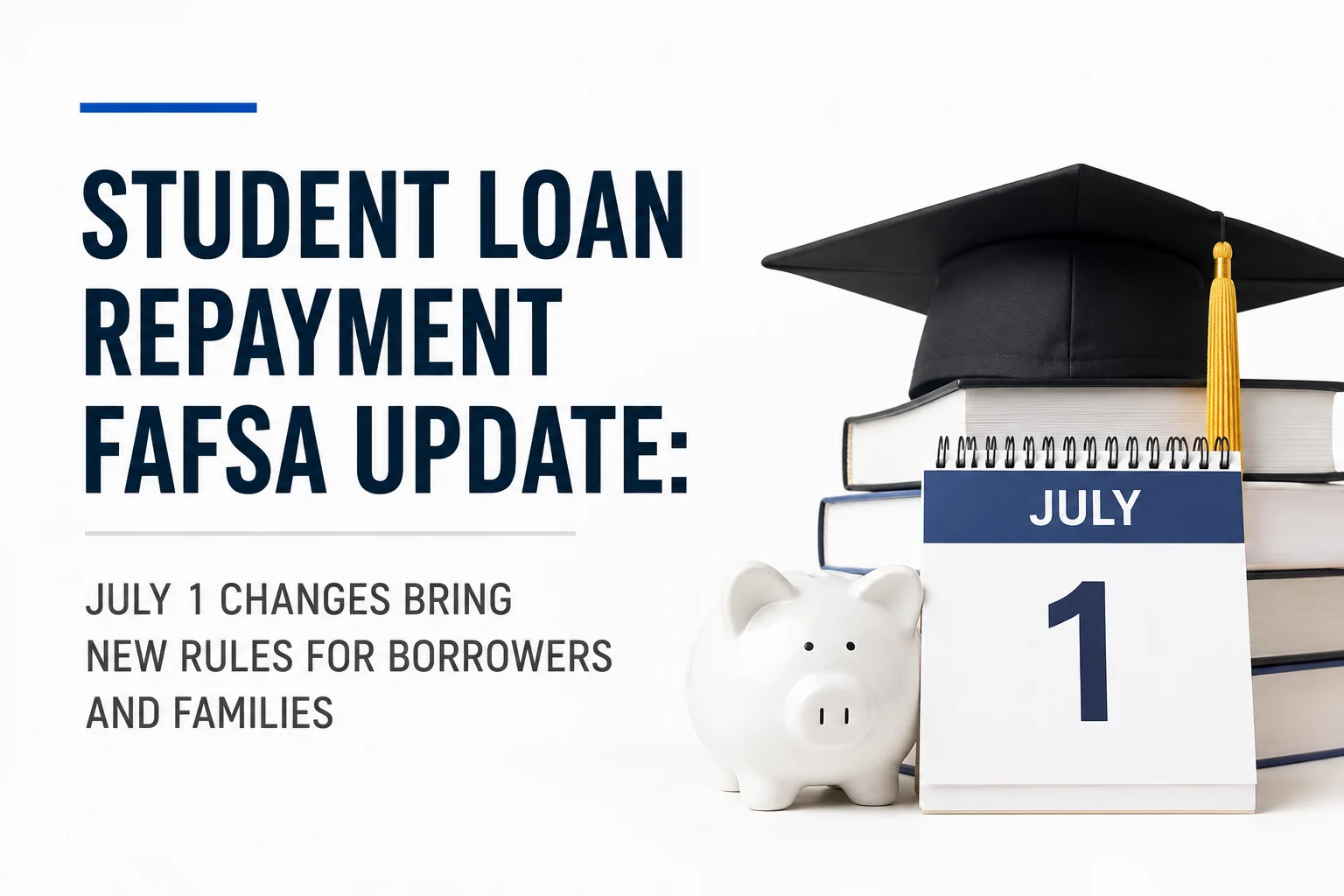
Student loan repayment enters a new phase on July 1, 2026. The federal government starts a major student loan overhaul. The changes affect repayment plans, borrowing limits, and some forgiveness rules. The biggest shift hits borrowers who use the SAVE plan.
The Education Department ends the SAVE plan and moves borrowers toward other options. Borrowers do not need to panic on July 1. But they need to watch for official notice and act within the given window. Reports say SAVE borrowers get a 90-day period after notice to choose another repayment plan. If they do not choose one, they may move to a standard plan that can cost more each month.
This update also matters for students who use FAFSA. FAFSA is the form that helps students access federal grants, work-study, and federal student loans. But the July 1 changes show one clear point. Getting a loan is only the first step. Repaying it now needs
more planning than before.
FAFSA does not repay student loans. FAFSA helps students and families qualify for federal student aid.
But FAFSA and repayment connect in one important way. Many students first enter the federal loan system through FAFSA. After college, those same loans move into repayment.
That means a family should not only ask, “How much aid can I get?” It should also ask, “How much can I safely repay later?”
This is the part many families miss.
A student may see a loan offer and accept it quickly. A parent may take a Parent PLUS loan to cover the gap. A graduate student may borrow more because federal loans feel safer than private loans.
But repayment rules now change. Some borrowers may face higher monthly bills. Some future borrowers may face stricter loan limits. Some families may need to compare school cost, future income, and repayment plan access before they borrow. That is the real FAFSA lesson in 2026.
Also Read: Trump Housing Bill Dispute
The SAVE plan is one of the most important parts of this update.
SAVE gives many borrowers lower payments. It also protects some borrowers from growing interest. But the plan now ends under the new repayment overhaul. Borrowers on SAVE must move to another plan after they receive notice.
The move does not happen in one single moment for every borrower. Reports say the Department of Education plans to send notices in waves. Borrowers then receive time to choose a new option. If they do not act, they may land in a standard repayment plan.
This matters because standard repayment can create a higher bill than an income-driven plan. Low-income borrowers may feel the change most.
Borrowers should not rely on social media screenshots or random advice. They should log in to StudentAid.gov. They should review their loan balance. They should check their servicer message. They should compare monthly payments before they switch.
Two new repayment paths get attention in the July 1 update.
The first is the Repayment Assistance Plan, also called RAP. Reports describe RAP as an income-based option that uses income and dependents to set payments. Investopedia reports that RAP payments range from 1% to 10% of income and include dependent deductions. It also reports an interest waiver feature for some borrowers.
The second is the Tiered Standard Repayment Plan. This plan uses debt size to set fixed payments over a longer term. Axios reports that the plan can run from 10 to 25 years.
This creates a new choice for borrowers.
Some borrowers may want lower payments now. Others may want a fixed plan that clears debt on a clear timeline. Some may want to avoid higher long-term interest. No single plan fits everyone.
That is why the most useful step is simple. Borrowers should compare total cost, monthly bill, and forgiveness rules before they enroll.
Parent PLUS borrowers may feel some of the sharpest changes.
Axios reports that Parent PLUS borrowers now face stricter borrowing caps. The report says the new cap is $20,000 per year and $65,000 total per dependent.
This changes planning for many families.
In the past, some parents used Parent PLUS loans to cover large college gaps after grants, scholarships, and student loans. That choice could help a student stay enrolled. But it also placed major debt on parents.
Now families may need to make harder choices earlier. They may need to choose a lower-cost school. They may need to reduce housing costs. They may need to compare community college transfer options. They may also need to talk about who pays the loan before they borrow.
This is one of the most important parts that many articles do not explain clearly.
A Parent PLUS loan is not the student’s loan. It belongs to the parent. The parent carries the legal duty to repay it.
Graduate students also face major borrowing changes.
Reuters reports that Congress sets new loan caps under the 2025 law. It says professional programs can have caps of $50,000 per year and $200,000 total. It also says other graduate study can face $20,500 per year and $100,000 total caps. A federal judge blocks a narrower Education Department rule that affects the definition of some professional degrees, but the ruling does not stop the broader loan caps.
This matters for students in high-cost graduate programs.
Many students use graduate debt as a bridge to a better career. That can still make sense in some fields. But the new limits force students to study the return before they borrow.
A law degree, medical program, dental program, business degree, or master’s degree can carry a large cost. The new system pushes students to compare tuition with likely salary.
That may become the biggest long-term effect of the July 1 change.
Borrowers also get a temporary interest benefit if they use auto pay.
Loan servicer pages and news reports say the auto pay interest rate reduction rises from 0.25% to 1% for eligible federal borrowers starting July 1, 2026. Borrowers need to enroll by September 30, 2026, to receive the temporary benefit through June 30, 2028.
This can help some borrowers save money. But it is not a full solution.
A 1% reduction helps with interest. It does not fix a bad repayment plan. It does not make a large balance disappear. It also requires steady bank funds. Borrowers who live paycheck to paycheck should avoid missed bank payments and overdraft fees.
Auto pay can help. But borrowers still need a plan.
Borrowers should take five simple steps. First, log in to StudentAid.gov. Check the loan type, balance, servicer, and current repayment plan.
Second, read every servicer notice. SAVE borrowers should watch for the 90-day plan selection notice.
Third, compare plans before switching. Look at the monthly payment and the total repayment cost.
Fourth, check forgiveness rules. Public service workers should review PSLF details before they leave any plan.
Fifth, avoid private refinancing unless they fully understand the trade-off. Private refinancing may lower rates for some borrowers. But it can remove federal protections, federal repayment plans, and federal forgiveness access.
That last point matters because some social media posts now push private refinancing as an easy answer. It may help some high-income borrowers. It may hurt borrowers who need federal safety nets.
Most reports explain the rule changes. But they often miss the borrower behavior change. The new system does not only change forms. It changes how families should think before they borrow.
FAFSA can make college feel more affordable at the start. But repayment decides whether that choice stays affordable later.
A family should now treat every loan offer like a future monthly bill. A student should ask what their first job may pay. A parent should ask what happens if the student cannot help with payments. A graduate student should ask whether the degree can support the debt.
This is not anti-college. It is pro-planning.
The safest borrower in 2026 is not the borrower who gets the biggest aid package. It is the borrower who understands the repayment path before signing.
Borrowers already feel confused because several changes arrive at once.
SAVE ends. New repayment plans begin. Borrowing caps change. Parent PLUS rules tighten. Graduate loan rules shift. Auto pay benefits change. Legal fights continue over some parts of the system.
That mix creates fear and wrong information. Some borrowers think July 1 is the final deadline for everyone. It is not. It is the start date for the new system. Some borrowers still receive notices after that date.
Some borrowers think FAFSA gives loan forgiveness. It does not. FAFSA helps access aid. Repayment and forgiveness follow separate rules.
Some borrowers think private loans have the same protections as federal loans. They do not. These small misunderstandings can cost people money.
The student loan repayment and FAFSA story now has one clear message. Borrowers need to plan earlier.
Students should not only fill out FAFSA and accept aid. They should read the loan terms. Parents should not accept Parent PLUS loans without a repayment talk. Graduate students should compare degree cost with future income.
The July 1, 2026, changes may make repayment less flexible for some borrowers. They may also force colleges and families to focus more on value.
For borrowers already in repayment, the next move is practical. Check the official account. Watch for notices. Compare plans. Do not ignore the deadline after notice.
For new students, the lesson is even bigger. FAFSA opens the door to federal aid. But repayment decides how heavy that door feels after graduation.