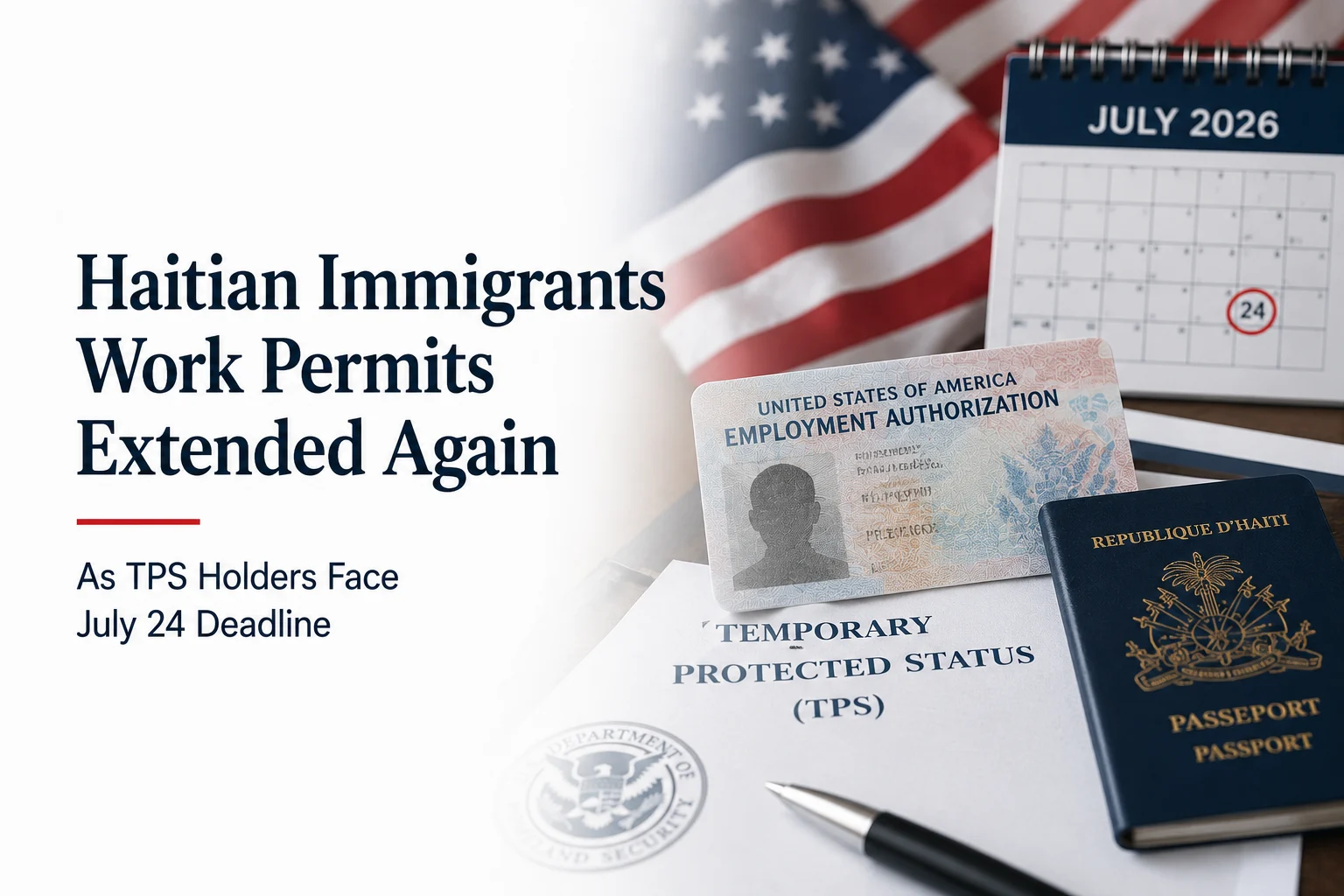
Haitian Immigrants Work Permits Extended Again As TPS Holders Face July 24 Deadline
 AND Editorial Team
Haitian immigrants work permits now run through July 24, 2026, for TPS holders covered by the latest extension. Reuters reports that the Trump administration extends work permits for Haitians with Temporary Protected Status hours before they are due to expire. USCIS says the Haitian TPS work permits now expire on July 24, 2026.
This does not give long-term certainty. It only gives Haitian TPS holders and employers more time while courts and federal agencies handle the next step.
Also Read: Pete Hegseth Military Grooming Standards
Temporary Protected Status, or TPS, lets eligible people stay in the United States when their home country faces war, disaster, or other serious unsafe conditions.
The Federal Register says TPS beneficiaries can remain in the United States during the designation period. It also says TPS beneficiaries may work and may receive an Employment Authorization Document if they request one.
This is why the work permit date matters. A TPS holder may lose the legal right to work if the EAD extension ends and no other work authorization applies.
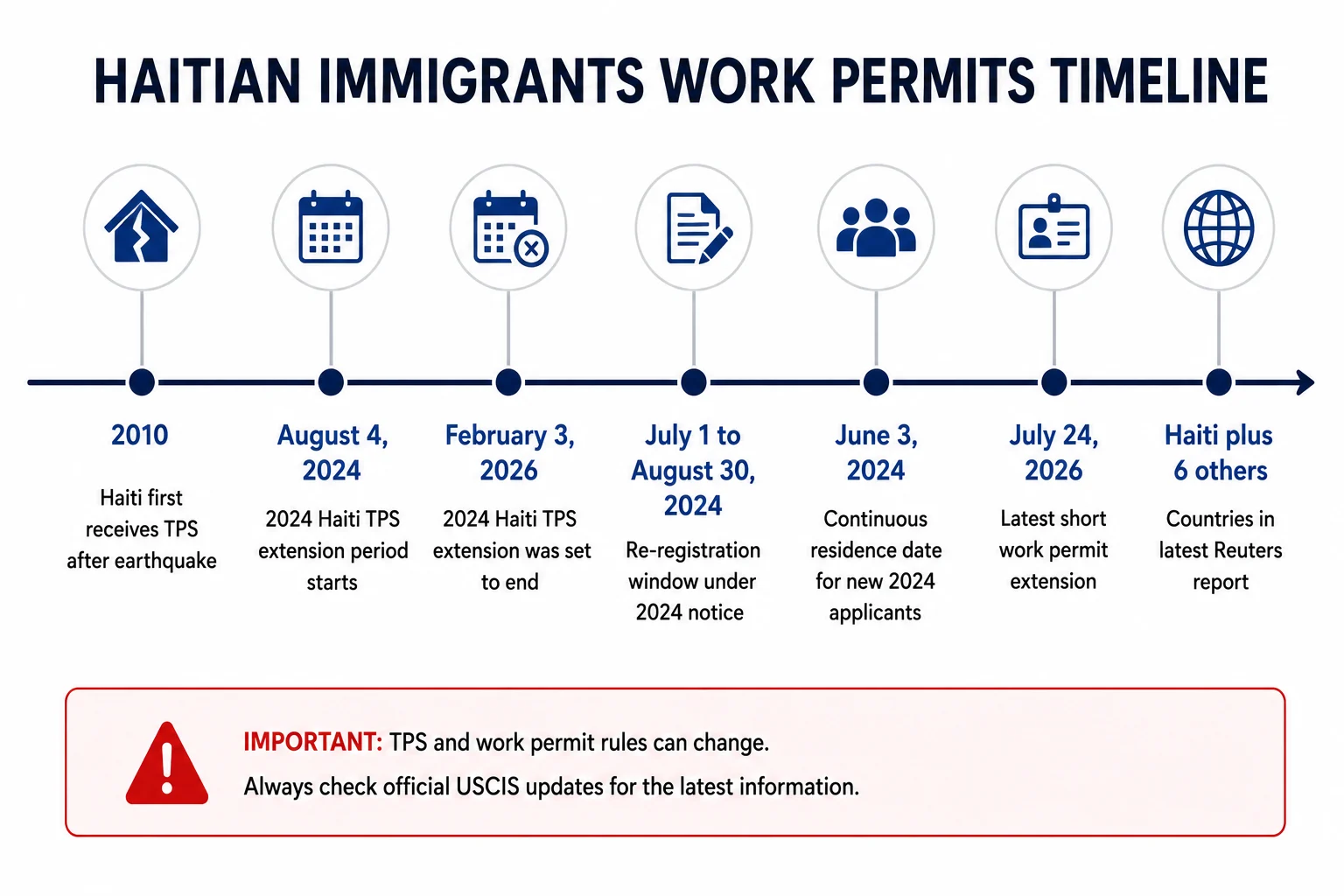
| Haitian TPS Work Permit Event | Date Or Number |
|---|---|
| Haiti first receives TPS after earthquake | 2010 |
| 2024 Haiti TPS extension period starts | August 4, 2024 |
| 2024 Haiti TPS extension was set to end | February 3, 2026 |
| Re-registration window under 2024 notice | July 1 to August 30, 2024 |
| Continuous residence date for new 2024 applicants | June 3, 2024 |
| Latest short work permit extension | July 24, 2026 |
| Countries in latest Reuters report | Haiti plus 6 others |
This table can become a strong infographic. Use a timeline from 2010 to July 24, 2026. Add one warning box that says: “Check the latest USCIS date before firing or resigning.”
The work permit extension comes after a major Supreme Court fight. Reuters reports that the Supreme Court ruled last month that the Trump administration could end TPS protections for Haitians and Syrians. Reuters also reports that rights groups fear the decision could strip work authorization and deportation protection from hundreds of thousands of people.
Cornell Law’s Supreme Court Bulletin says the case asks whether the Trump administration can end TPS for Syrian and Haitian nationals. It also says the case involves judicial review, national security, and the safety of Haitian and Syrian TPS holders.
This is the key legal issue. The fight is not only about one permit card. It is about whether federal officials can end TPS and how much courts can review that decision.
Employers now face a practical problem. Some workers may show an older EAD card. Some may have an automatic extension. Some may have a pending renewal. Some may have another immigration status. Employers should not guess.
The E-Verify update says employers should enter July 24, 2026, as the expiration date when completing a case based on the latest Haiti TPS extension.
This is a major point most articles miss. The story is not only about immigration politics. It is also about payroll, HR files, Form I-9, E-Verify, and workplace compliance.
TPS and a work permit are connected, but they are not the same document. TPS is the temporary immigration protection. The work permit is the Employment Authorization Document. A person may have TPS and request an EAD. The Federal Register says TPS does not lead to lawful permanent resident status or any other immigration status by itself.
This matters because many people use the words together. A Haitian TPS holder may need both valid TPS protection and valid work authorization to keep working legally.
The 2024 Haiti TPS notice includes key eligibility dates. The Federal Register says the 18-month Haiti TPS designation began on August 4, 2024, and was set to end on February 3, 2026. It says existing TPS beneficiaries had to re-register between July 1, 2024, and August 30, 2024.
The same notice says new applicants had to show continuous residence in the United States since June 3, 2024. It also says they had to show continuous physical presence since August 4, 2024.
This is important for readers. A new work permit update does not make every Haitian immigrant eligible for TPS. Eligibility still depends on dates, residence, presence, and other legal requirements.
Work permits can also create a cost burden. USCIS fee schedule data lists Form I-765 filing at $470 online and $520 by paper for many employment authorization filings.
This fee matters for families. A household with more than one working adult may face several filing costs at once. Many articles discuss the policy fight but skip the filing cost problem.
The work permit issue affects local communities. Axios reports that about 158,000 Haitian TPS holders live in Florida. It also reports that about 93,000 people there are at risk of losing work authorization.
The national debate also focuses on places like Springfield, Ohio. Supporters of TPS say Haitian workers fill jobs and support local businesses. Critics say local schools, housing, hospitals, and services face pressure.
Both sides argue over community impact. But one fact stays clear. A sudden work permit cutoff can affect workers, employers, landlords, schools, and local tax bases at the same time.
The July 24 date creates a short planning window. Employers may need to review I-9 documents. They may need to check E-Verify guidance. They may need to ask legal counsel before they remove workers from schedules.
Labor groups warned that ending work permits could disrupt key industries. Reuters reports that labor groups pushed for an extension because permit loss could create chaos in workplaces.
This is the strongest workforce angle. The issue is not only deportation fear. It is also about staffing, shifts, payroll, and business continuity.
Short deadlines create scam risk. Bad actors may tell TPS holders that they can guarantee a new permit. They may ask for cash. They may promise a special fast track. They may use fake USCIS language.
Readers should use official USCIS pages and trusted legal groups. They should avoid anyone who asks them to sign blank forms. They should keep copies of receipts, notices, EAD cards, and filings. This section adds reader value. It also helps the article serve families who need practical protection.
Haitian TPS holders should check these items now:
| Item To Check | Why It Matters |
|---|---|
| EAD category | TPS work permits usually show A-12 or C-19 |
| EAD expiration date | It helps confirm if an automatic extension applies |
| USCIS receipt notices | They may support a pending renewal |
| TPS approval notice | It helps prove status history |
| Employer I-9 record | Wrong dates can cause job problems |
| Legal options | Some people may qualify for another status |
| Scam warnings | Deadlines attract fake legal helpers |
This section can become an infographic for readers. Use “7 documents to check before July 24.”
Employers should not rely on social media posts or old articles. They should follow USCIS, E-Verify, and Form I-9 instructions. The latest E-Verify guidance points employers to the July 24, 2026 expiration date for Haiti TPS employment authorization.
Employers should also avoid discrimination. They should not target workers only because they are Haitian or because they have TPS. They should use the same work authorization review process for all workers.
TPS is temporary by design. The Federal Register says TPS is a temporary immigration benefit. It also says the DHS secretary must review country conditions and decide whether to extend or terminate a TPS designation.
That means each deadline can change. A court order can extend it. A new DHS notice can shorten it. A Supreme Court ruling can change the legal path. A new law from Congress can also change the result.
This is why the July 24 date matters, but it may not be the final word.
The Haitian work permit issue now sits inside a bigger immigration fight. The Trump administration says it wants stricter immigration enforcement and stronger control over work authorization. Immigrant advocates say TPS holders are legal workers who built families, jobs, and businesses in the United States.
Reuters reports that the administration extends the permits while also pursuing a broader hardline immigration policy. The short extension gives workers time. It does not give peace of mind.
Haitian immigrants work permits are extended through July 24, 2026, for TPS holders covered by the latest federal action. The most important next step is verification. Workers should check their own TPS and EAD documents. Employers should check USCIS and E-Verify guidance. Families should avoid scams and talk to qualified legal help before making major decisions.
The July 24 deadline is not only a date on a card. It is a deadline that affects jobs, rent, businesses, and thousands of Haitian families across the United States.