David Streever ICE Warning Sparks Free Speech Fight Over Email Criticizing Agency
 AND Editorial Team
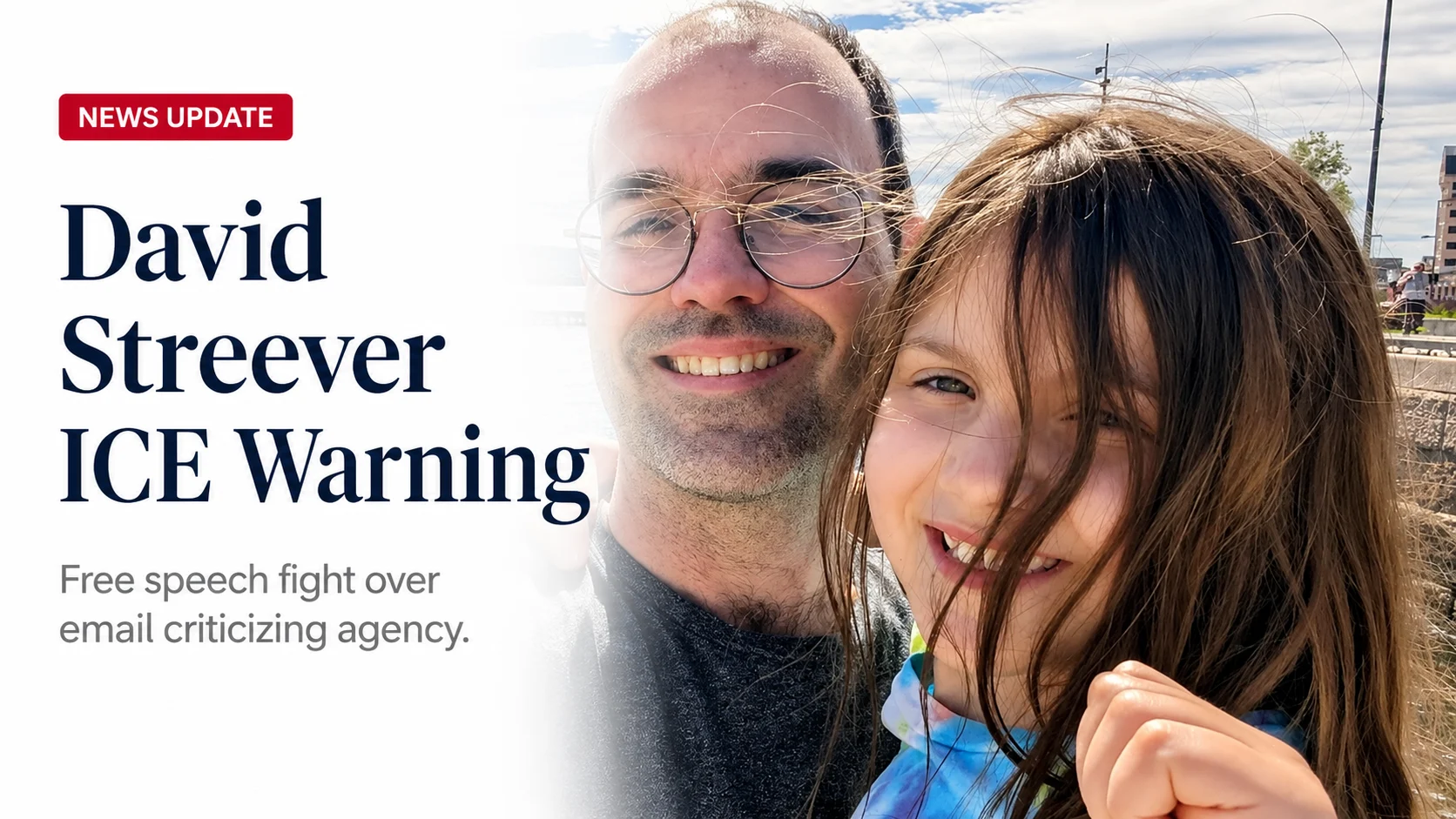
David Streever becomes part of a new free speech fight after federal officers warn him over an email that criticizes ICE. Streever lives in Rochester, New York. His lawyer says Streever sends the email in January 2026 to Todd Lyons, who was acting ICE director at the time. The email comes after an ICE officer fatally shoots Renee Good in Minneapolis during an anti-ICE demonstration.
The warning does not come right away. It comes months later. That delay makes the case more serious because it raises one clear question. Why does one angry email trigger a federal visit after so much time passes?
The most striking part of the case is the timing. Streever is on a trip to Finland when two officers go to his home in Rochester. His lawyer says the officers give his wife a warning notice. The notice says an email he sent months earlier is a threat.
That detail changes the public reaction. This is not a normal email reply from an agency. This is a home visit. It involves a family member. It happens while Streever is outside the country.
For many readers, that makes the case feel less like routine safety work and more like pressure from the government.
Also Read: Chicago Police Superintendent Larry Snelling To Retire After Short Tenure
The case does not stop at the home visit. AP reports that federal agents also try to confront Streever at a New York City hotel after he returns from Finland. Hotel staff turn them away, according to Adam Steinbaugh, the FIRE attorney who represents Streever.
This is the part many basic reports miss. The hotel visit creates a second issue. It is no longer only about the email. It is also about how agents know where to find him after international travel.
The public still does not know the full tracking method. That gap matters because the government’s ability to locate a person can chill speech even when no charges are filed.
Streever’s email uses harsh language. AP reports that he calls Lyons a “monstrous human being” and says he “will never know peace.” The email also predicts shame and downfall for Lyons.
The words are angry. They are personal. They are political. But Streever’s lawyer says the email does not say Streever plans to hurt anyone. Steinbaugh says a true threat means a serious statement of intent to commit violence. He says this email does not come close to that line.
That point sits at the center of the case. The law can punish real threats. But the First Amendment protects strong criticism of government officials. This case tests where that line sits.
ICE does not give a full public explanation. AP reports that ICE declines to comment because it cites an ongoing investigation. The agency says it investigates credible threats against employees, officers, and the ICE director.
That is the agency’s main defense. Federal officers do face real threats. Some online posts can expose agents or put families at risk. So ICE has a duty to check serious threats.
But that duty does not answer every question here. The warning still involves one email from months earlier. It also involves a home visit and a hotel attempt. That is why the case becomes a civil liberties story, not only a law enforcement story.
Streever has support from the Foundation for Individual Rights and Expression. His attorney Adam Steinbaugh says the email is political speech and a petition to the government. He says there is “nothing to investigate” because the email does not show a plan to commit violence.
This makes the case more than one man’s complaint. FIRE often defends speech across political lines. Its role gives the case stronger legal weight because it frames the warning as a First Amendment issue.
The group’s argument is simple. A person can write an angry message to a public official. The government should not answer that message with a visit that scares the person into silence.
Streever is not the only New York resident who gets a warning. The same week, Paigelynne Gonyea, a Syracuse poll worker, says two federal officers visit her at a voting site over a social media post about the ICE officer who shot Renee Good. AP reports that officers give her a written notice and say she may violate laws against posting personal information about federal officers.
That second case gives Streever’s story more force. One warning can look like a single review. Two warnings in the same week can look like a wider operation.
The facts are not identical. DHS says Gonyea posted an officer’s address. Gonyea says her post used information already reported in the media. But both cases raise the same question. When does federal safety work become a warning to critics?
The Gonyea case also brings election-site concerns. AP reports that federal officers visit Gonyea while she works at a polling place during New York’s primaries. Another poll worker records the encounter. AP also reports that the New York Attorney General’s Office reviews the interaction.
This matters because a polling place has special public trust. Even if no voters are present, law enforcement visits can still create fear.
That point helps explain why the Streever case spreads fast. The public does not view it as one email. It views it as part of a broader debate about ICE power, speech, privacy, and protest.
A warning notice can sound small. It is not an arrest. It is not a charge. It is not a lawsuit. But a warning from federal officers can still carry power.
Most people change their behavior after a government visit. They may stop posting. They may stop emailing officials. They may avoid protest topics. That is why civil rights lawyers use the phrase “chill speech.”
The legal fight may focus on whether the email crosses the threat line. But the public concern is wider. People ask whether the government should visit critics before it has a clear threat.
The hotel attempt raises a modern privacy issue. Streever’s lawyer says agents try to meet him after he returns from Finland. AP confirms the hotel attempt through Steinbaugh’s account.
That does not prove which data source agents use. It does not prove credit card tracking. It does not prove travel database use.
But it shows why people worry. A person can write one email in January. Months later, officers can find his home and try to find his hotel. Even if the agency has a lawful reason, the lack of public detail leaves a trust gap.
No court case has been filed yet, based on the available reporting. Streever’s lawyer says he is still reviewing the situation. ICE says it continues to investigate credible threats. Streever says he does not plan to contact DHS after the warning.
The next step may depend on what ICE does now. If the agency closes the matter, the case may stay as a public speech dispute. If ICE takes more action, the case can move into court.
For now, the David Streever ICE warning stands as a sharp example of a bigger question. Can the government warn citizens over angry political speech without crossing the line into intimidation?