Pete Hegseth Military Grooming Standards: New Beard Rules Put Shaving Waivers, Medical Profiles And Religious Exemptions Under Review
 AND Editorial Team
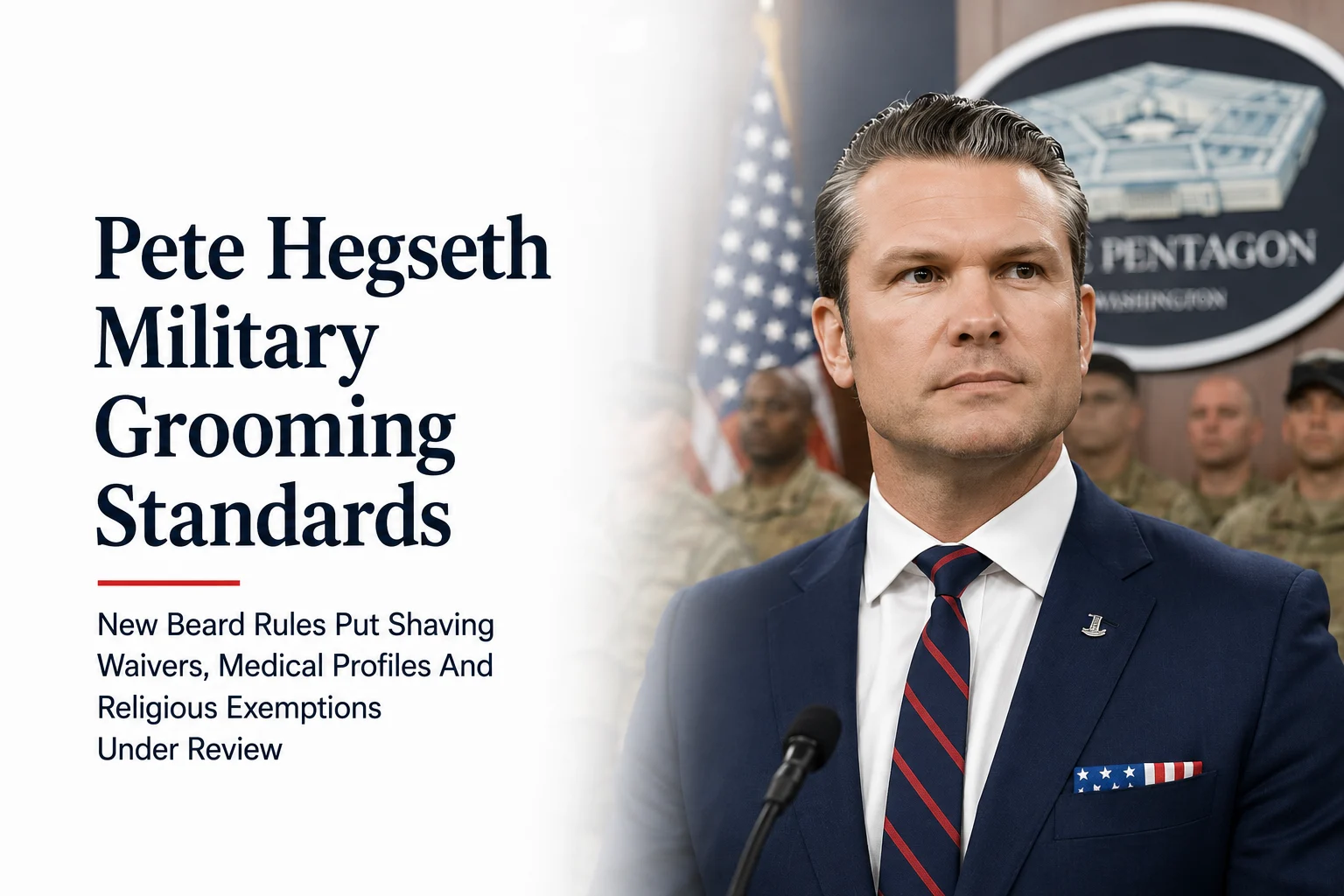
Pete Hegseth military grooming standards now sit at the center of a larger military discipline fight. Hegseth signs a memorandum that tells the military services to strictly enforce facial hair grooming standards. The official Pentagon report says the military grooming standard is a clean-shaven and neat appearance. It also says the change takes aim at long-term shaving waivers.
This issue grows again in July 2026. CBS News reports that Hegseth privately complains after seeing service members with facial hair. It also reports that he expects commanders to enforce hair, weight, and grooming standards across all ranks.
The debate is not only about looks. The Pentagon links the rule to readiness, discipline, mask seals, and protective equipment. Critics say the policy may hurt troops with real medical or religious needs.
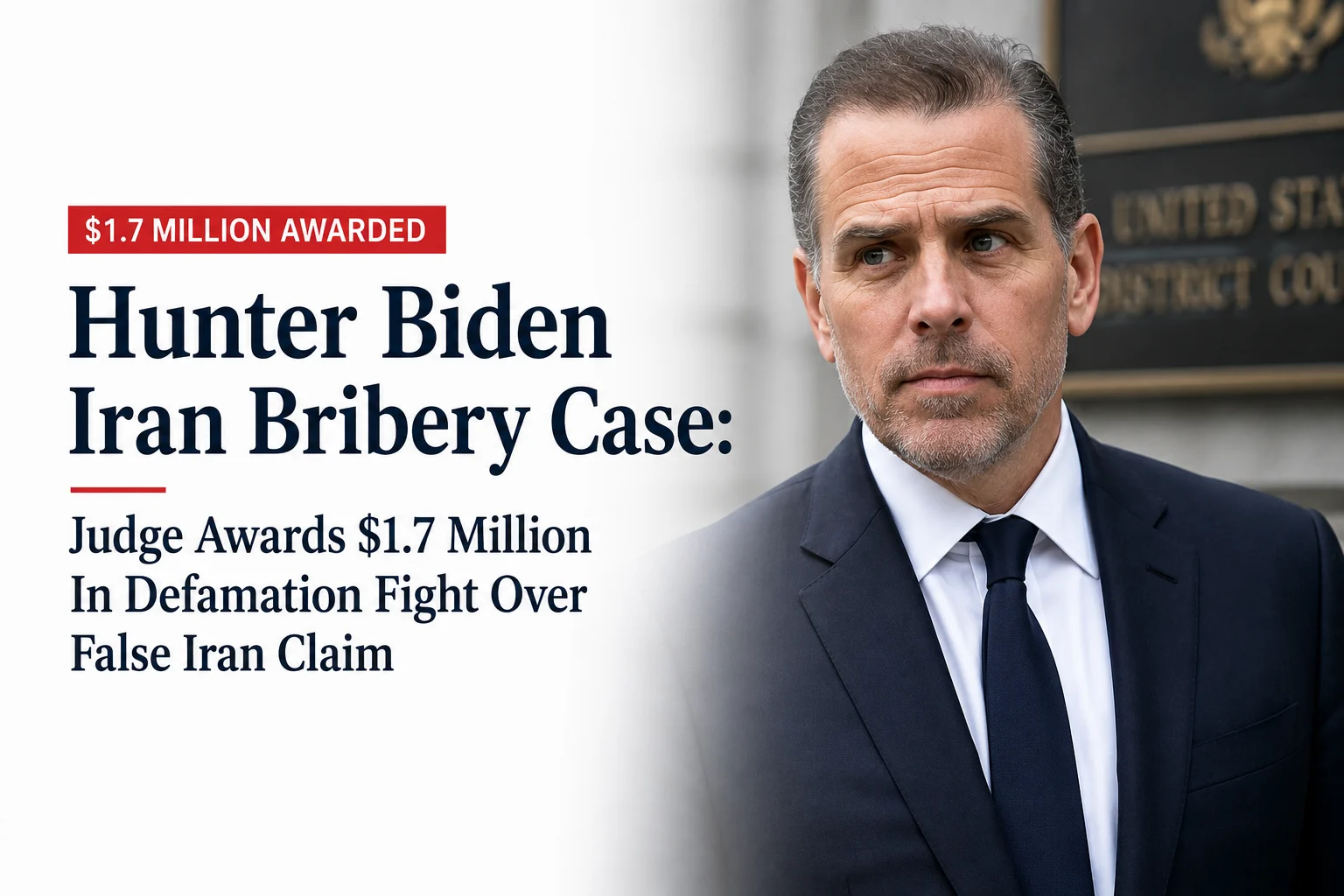
Also Read: Hunter Biden Iran Bribery Case
The Pete Hegseth beard policy changes how medical shaving waivers work. The old system allowed some troops to carry long-term or permanent shaving profiles. The new system treats a shaving waiver as a temporary medical issue. It pushes troops into treatment plans. It also gives commanders a bigger role in deciding what happens next.
The official Pentagon report says service members with medical waivers get one year to address the medical condition. It also says commanders start separation action if a member still needs a shaving waiver after more than one year of treatment.
This is the key point many articles miss. Troops do not lose their jobs on day one. The policy creates a one-year treatment clock. After that, commanders review the case and may start separation.
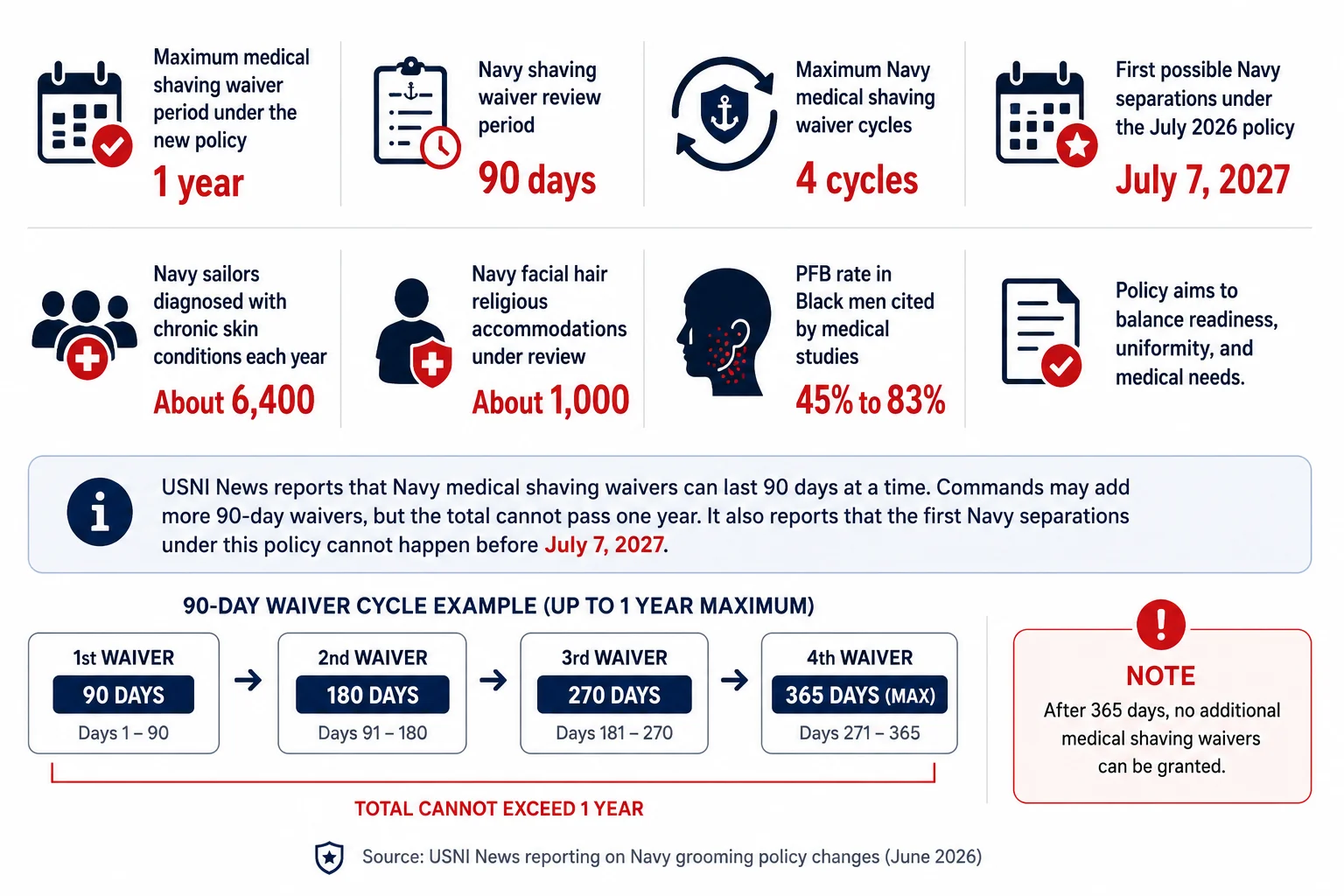
The numbers show why the policy matters.
| Pete Hegseth Grooming Standards Data Point | Number |
|---|---|
| Maximum medical shaving waiver period under the new policy | 1 year |
| Navy shaving waiver review period | 90 days |
| Maximum Navy medical shaving waiver cycles | 4 cycles |
| First possible Navy separations under the July 2026 policy | July 7, 2027 |
| Navy sailors diagnosed with chronic skin conditions each year | About 6,400 |
| Navy facial hair religious accommodations under review | About 1,000 |
| PFB rate in Black men cited by medical studies | 45% to 83% |
USNI News reports that Navy medical shaving waivers can last 90 days at a time. Commands may add more 90-day waivers. But the total cannot pass one year. It also reports that the first Navy separations under this policy cannot happen before July 7, 2027.
This section works well as an infographic. Use a “90 days → 180 days → 270 days → 365 days” timeline. Add one note that says: “After one year, the service member faces review for separation.”
The medical issue behind many shaving waivers is pseudofolliculitis barbae. Pseudofolliculitis barbae is also called PFB or razor bumps. It happens when shaved hair curls back into the skin. It can cause pain, swelling, bumps, scarring, and infection.
CBS News says PFB affects Black men at a much higher rate. It cites studies that estimate the condition occurs in about 45% to 83% of Black men. This makes the policy more sensitive. A clean-shaven rule may look neutral on paper. But it can hit some groups harder in real life.
The best article angle is clear here. This is not only a beard debate. It is a medical readiness debate. The question is whether the military can protect uniform standards without pushing out trained troops who have a real skin condition.
The Pete Hegseth shaving waiver rule creates different tracks. A troop who refuses to shave faces one issue. A troop with PFB faces another issue. A troop with a religious beard request faces a third issue.
The official Pentagon report says the new medical shaving waiver policy does not affect religious accommodations. It also says the policy does not stop mustaches if a service branch allows them.
But Stars and Stripes reports that the broader policy returns to pre-2010 standards and puts many religious facial hair waivers under strict review. It says troops with exemptions face individualized reviews and must show documentation for a religious or sincerely held belief.
This creates confusion for service members. Medical waivers follow a treatment clock. Religious waivers follow an accommodation review. Commanders now need clear guidance so they do not treat every beard as misconduct.
The policy does not ban all facial hair. Stars and Stripes reports that neatly trimmed mustaches remain allowed. The mustache cannot extend past the mouth corners. It also cannot enter the respirator seal zone.
The same report says some special operations formations may request modified grooming standards for mission-essential needs. This means beards may still appear in limited mission cases.
This point adds useful clarity. The rule mainly targets beards, long-term shaving profiles, and weak enforcement. It does not erase every form of facial hair.
The Pentagon frames the beard crackdown as a readiness issue. Military leaders say troops must wear protective masks when needed. Beards can affect the seal area of some respirators. The military also uses the rule to support a wider standard of uniform discipline.
USNI News reports that the Navy policy frames grooming as a mission safety issue. It says the Navy links grooming standards to safe use of protective equipment in operational conditions.
This is the strongest policy argument from Hegseth’s side. A clean shave can make protective gear easier to use. It also gives commanders one standard to enforce.
The hard question remains. The military must still explain how it handles troops with PFB, eczema, and religious beard requirements without wasting trained manpower.
The new grooming policy may create a retention issue. The military spends time and money to train troops. A one-year waiver clock may remove trained service members who still perform their jobs well. This is especially important in technical roles, shipboard roles, aviation support, cyber roles, maintenance, logistics, and medical fields.
USNI News reports that about 6,400 sailors are diagnosed with chronic skin conditions each year that affect their ability to meet grooming standards. It also reports that about 1,000 Navy religious facial hair accommodations need review.
That is the underreported story. The issue is not only personal appearance. It is also workforce planning. If too many trained troops face separation, the services must replace their experience. That can hurt units that already face recruiting and retention pressure.
The timeline helps readers understand the policy.
| Date | Grooming Standards Development |
|---|---|
| March 2025 | Hegseth orders a military-wide review of grooming standards, according to Stars and Stripes. |
| August 2025 | Hegseth signs a memorandum on facial hair grooming standards. |
| September 2025 | The Pentagon explains the one-year medical shaving waiver rule. |
| September 30, 2025 | Hegseth tells senior leaders that the era of loose shaving profiles is over. |
| June 2026 | Navy religious beard accommodation requests come under renewed review. |
| July 2026 | Navy issues a policy that limits medical shaving waivers to one year. |
| July 7, 2027 | First Navy separations under the July 2026 policy can begin. |
Stars and Stripes says Hegseth gave military branches 60 days to build implementation plans and about 90 days to enforce new grooming policies. It also reports that the rule aims to end permanent shaving profiles for troops with PFB.
This timeline gives readers more value than a normal “Hegseth bans beards” headline. It shows that the rule moves through stages. It also shows why July 2026 becomes an enforcement moment.
These questions matter because the military needs both discipline and manpower. It also needs rules that commanders can enforce without confusion.
Service members should not treat the policy as a normal grooming reminder. A medical shaving waiver now needs a treatment plan. A waiver can face review every 90 days in the Navy. A waiver cannot run beyond one year under the new Navy rule. A service member who still cannot shave after one year may face administrative separation.
Troops with religious beard accommodations should keep documents ready. Stars and Stripes reports that the policy requires individualized reviews and proof tied to religious or sincerely held belief claims.
Troops should also ask their command for branch-specific guidance. Each service may issue its own instructions under the larger Pentagon standard.
Pete Hegseth military grooming standards now test more than beards. They test command discipline. They test medical policy. They test religious accommodation rules. They also test whether the military can enforce one appearance standard without removing troops who have valid medical or faith-based reasons.
Hegseth wants clean-shaven faces and stricter enforcement. Supporters see that as a return to military discipline. Critics see a risk to Black troops with PFB and religious troops with beard requirements.
The next major issue is implementation. If commanders apply the rule clearly, the policy may become a strict but predictable standard. If commanders apply it unevenly, the beard crackdown may become a larger fight over fairness, retention, and trust inside the force.