Judge Sullivan Blocks USPS Ballot Rule
 AND Editorial Team
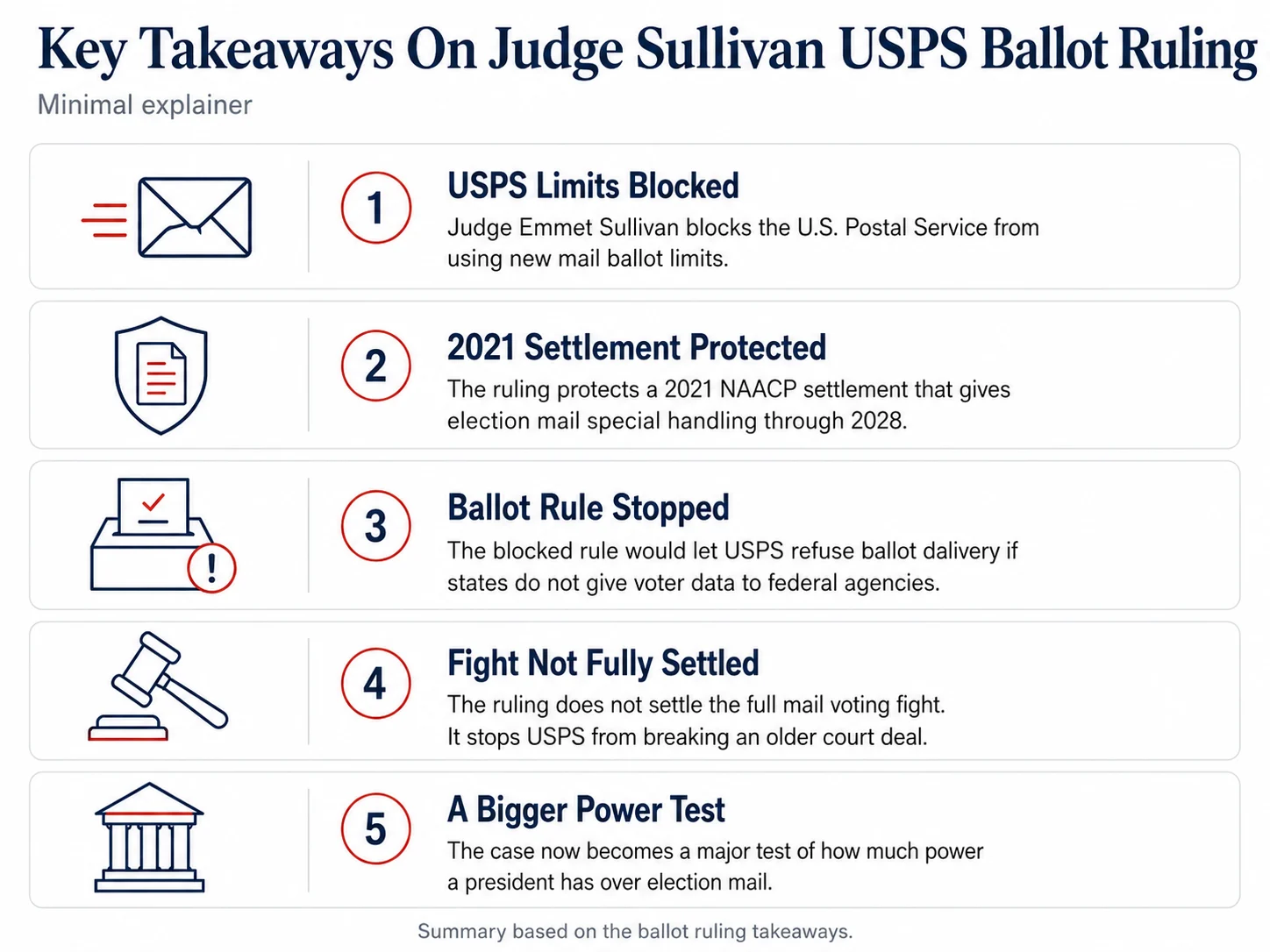
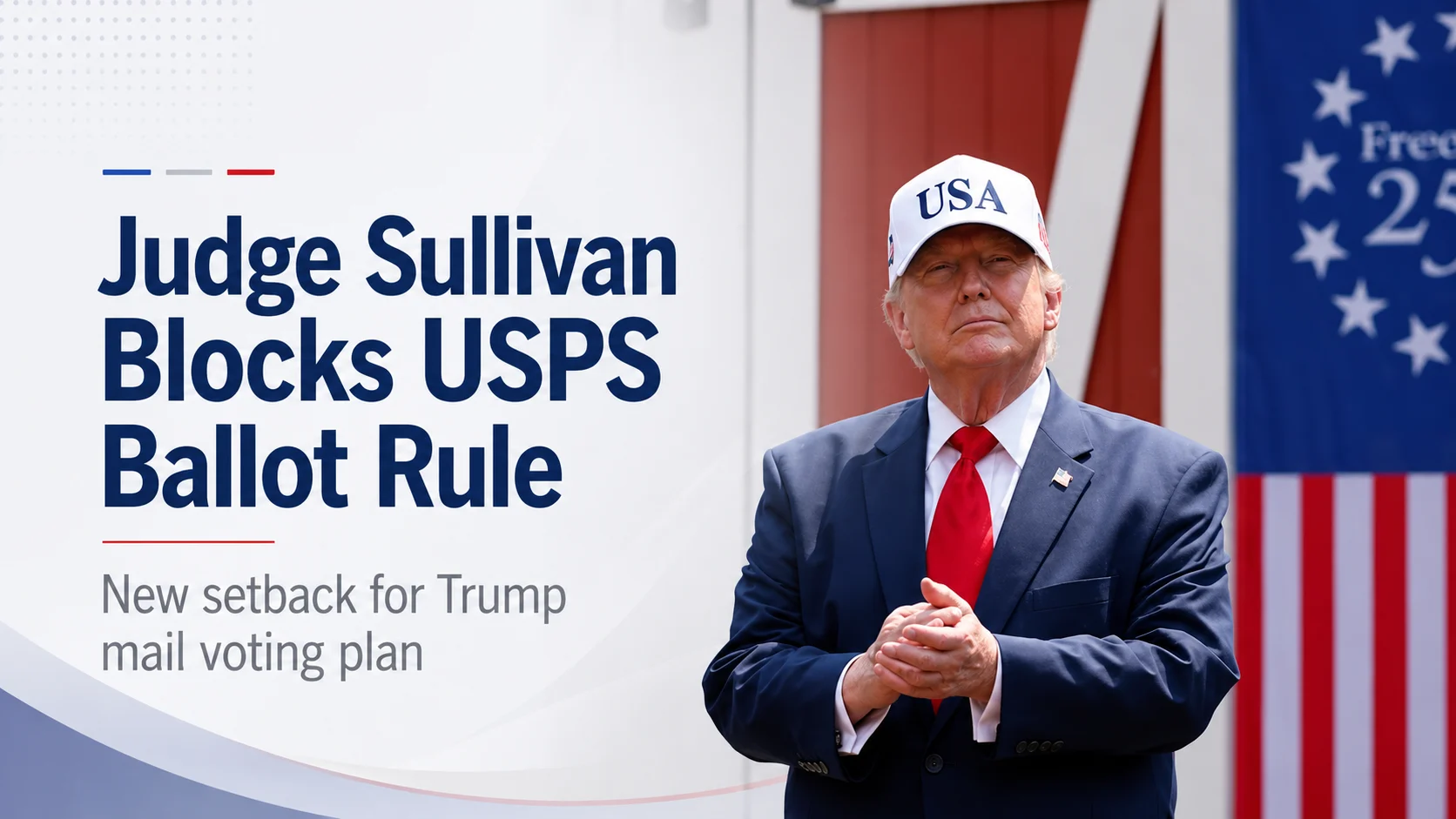
U.S. District Judge Emmet Sullivan blocks the U.S. Postal Service from moving ahead with new mail ballot restrictions.
The ruling comes on July 1, 2026. It gives the NAACP a court win. It also gives Donald Trump another legal loss in his push to change mail voting before the November 2026 midterm elections. Reuters reports that Sullivan says the USPS plan violates a 2021 settlement with the NAACP. That settlement requires special steps for fast ballot mail delivery through 2028.
The ruling matters because it does not only deal with one state. It deals with USPS as a national mail agency. That gives the order a wider effect.
The USPS proposal links mail ballot delivery to new state duties. Under the plan, states need to give voter lists to federal agencies. States also need to follow new ballot rules before USPS makes deliveries.
If a state does not comply, USPS can refuse to deliver those ballots. Reuters reports this as one of the main parts of the blocked rule. This detail makes the case bigger than normal mail handling.
The fight is not only about speed. It is also about control. The rule gives USPS a gatekeeper role in elections. That is unusual because USPS normally moves mail. It does not decide who can receive a ballot.
The 2021 settlement sits at the center of the case. The NAACP sued USPS after mail delays during the 2020 election period. The settlement then required USPS to take extra steps for timely election mail.
Sullivan now says USPS cannot create a new rule that blocks ballot delivery and still claim it follows that deal. This is the part many quick reports miss.
Sullivan does not need to answer every big election law question in this ruling. He only needs to ask one direct question: did USPS agree to give ballot mail priority through 2028? The answer matters. A court settlement is not a press promise. It binds the agency.
Also Read: Student Loan News: Trump Student Loan Overhaul Starts July 1 With New Repayment Rules
The USPS rule comes from Trump’s March 2026 executive order. That order tells federal agencies to create a citizenship-based voter list. It also tells USPS to deliver mail ballots only to voters on state-approved lists. Reuters reports that Sullivan’s ruling blocks the USPS part of that plan.
This is not the only court setback. On June 25, 2026, U.S. District Judge Indira Talwani in Boston blocks Trump’s wider election order for the 2026 midterm cycle. AP reports that Talwani says the order violates separation of powers because states and Congress set election rules, not the president alone.
So Sullivan’s ruling adds a second layer. Talwani hits the president’s authority. Sullivan hits the USPS settlement problem.
The public debate sounds large and angry. But the court issue is more focused. Trump supporters say the rule protects election integrity. They say the government needs stronger checks on mail ballots.
Opponents say the rule puts voters at risk. They say a voter can lose ballot access because of a data fight between a state and the federal government.
Sullivan’s order focuses on the agency duty. USPS signs a deal to move election mail quickly. Then it proposes a rule that can stop ballot delivery. The judge says that does not fit the settlement.
Also Read: Heritage Valley Nurse Lawsuit: Whistleblower Case Raises New Patient Safety Questions
The ruling also raises a practical issue. Postal workers deliver mail. They do not run state voter rolls. They do not check every voter’s status. They do not decide election eligibility.
AP reports that postal workers push back against this kind of role. They say it risks making USPS look political. That point adds real value to the story. The case is not only about Trump or Sullivan. It is also about whether a mail agency can handle election screening without creating delays, errors, or public distrust.
The ruling also protects state control over election systems. In the United States, states and local officials run elections. The federal government has some election law power. But a president cannot simply rewrite state ballot systems through USPS rules.
That is why the Boston ruling matters beside Sullivan’s order. AP reports that Talwani agrees with states that Trump’s order crosses a constitutional line. Sullivan’s ruling does not replace state law. It keeps USPS from using mail delivery as pressure against states.
The Trump administration can still fight the ruling. The White House already supports the wider executive order. AP reports that the administration signals it plans to appeal the Boston ruling.
That means the legal fight may not end soon. The next stage can test three things. Courts may review Trump’s power over federal agencies. They may review USPS duties under the 2021 settlement. They may also review how far federal agencies can go before an election.
The timing gives this case more weight. The midterm elections take place on November 3, 2026. Reuters says the ruling comes as Trump’s party fights to keep control of Congress.
Election rules need time. States print forms. Voters request ballots. Local offices set deadlines. USPS plans mail movement. A late rule change can create confusion even before a ballot reaches a voter. That is why courts often look closely at election changes near voting season. The issue is not only policy. It is also timing.
The online reaction follows party lines. Many Trump critics call the ruling a win for voting access. They say it stops a federal agency from blocking ballots.
Many Trump supporters call it judicial activism. They say Sullivan blocks a needed election safeguard. That split shows why this case will stay in the news. One side sees mail voting as access. The other side sees mail voting as risk.
The ruling does not end that debate. It only says USPS must follow the settlement it already accepted.
This case has a narrow legal hook. Many election lawsuits ask courts to decide who has power over voting rules. This case asks whether USPS can walk away from a signed settlement.
That makes the ruling harder to dismiss as only politics. The judge points to an earlier legal agreement. The NAACP points to a clear agency promise. USPS proposes a rule that can stop ballot delivery. That is why the 2021 settlement becomes the strongest part of the case.
USPS cannot use the blocked rule while the order stands. States do not need to give voter lists to keep USPS ballot delivery under this ruling.
The Trump administration can appeal. Higher courts can narrow or pause the order. But for now, Sullivan’s ruling keeps the 2021 NAACP settlement alive. It also keeps USPS in its normal lane: deliver election mail on time.