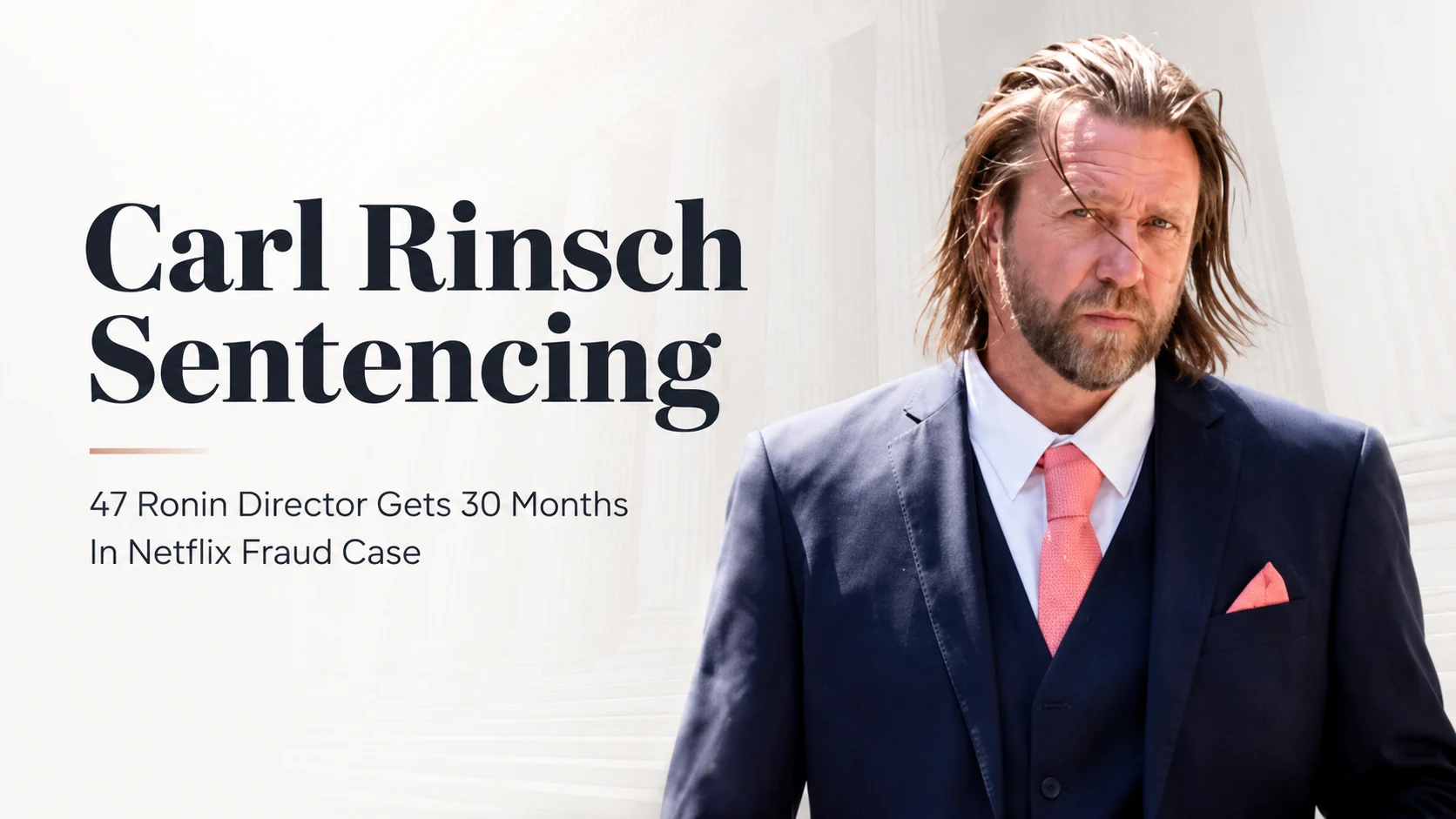
Carl Rinsch Sentencing: 47 Ronin Director Gets 30 Months In Netflix Fraud Case
 AND Editorial Team
A federal judge sentences Hollywood director Carl Rinsch to 30 months in prison in the Netflix fraud case.
U.S. District Judge Jed S. Rakoff gives the sentence on June 29, 2026, in New York. Rinsch also receives an order to repay about $11 million. He must report to prison in September. The case involves money that Netflix gives him to finish a sci-fi series called White Horse.
Rinsch is best known for directing 47 Ronin, the 2013 film starring Keanu Reeves. His career once places him near big Hollywood names. But this case now turns him into a symbol of failed streaming-era spending.
The court does not treat this as only a bad business deal. Prosecutors say Rinsch takes money for production and uses it for himself. The jury convicts him in December 2025 after a one-week trial.
Also Read: Supreme Court Mail-In Ballots Ruling
Prosecutors say Rinsch tells Netflix he needs $11 million to finish White Horse.
Netflix already pays about $44 million for the project in 2018 and 2019. Then it sends another $11 million in 2020 after Rinsch says he needs more money to complete the show.
Instead of using the new funds for the series, prosecutors say Rinsch moves the money into personal accounts. He then makes risky stock and crypto bets. The Justice Department says he uses the money for speculative stock options and cryptocurrency. It also says he spends millions on luxury goods.
This point matters because the case does not only involve overspending. It involves a direct claim that production money leaves the project and moves into personal use.
That is why the judge sends him to prison.
White Horse is the unfinished sci-fi series at the center of the case.
The show is also known by the name Conquest in some reports. The project focuses on a future world and clone-like beings. Netflix backs the project during the streaming boom, when major platforms spend heavily on fresh shows and big ideas.
Rinsch never delivers the finished series to Netflix.
That unfinished status becomes a key part of the case. Netflix pays for a show. The show does not get finished. Prosecutors say the final $11 million does not go where Rinsch says it will go.
This makes the case different from a normal Hollywood failure. Many shows run over budget. Many shows never reach viewers. But prosecutors say Rinsch uses new production money for personal trading and luxury spending.
Prosecutors say Rinsch spends large sums on luxury items after he gets the money.
AP reports that prosecutors describe purchases that include five Rolls-Royces, a red Ferrari, watches, clothes, luxury bedding, and expensive mattresses. They also say he pays large credit card bills with the money.
Business Insider reports that the sentencing hearing also discusses a costly handmade mattress and other luxury spending. It says the judge sees the conduct as serious even while he considers mental health issues.
The details get attention because they are easy to understand. Netflix gives money for a show. The money goes to cars, crypto, and expensive goods. That makes the case simple for the public.
But the bigger issue is not just the flashy spending. The bigger issue is trust. Studios often give creators large control. This case shows what can happen when a major company gives more money without tight enough controls.
The 30-month sentence creates debate because prosecutors want more time. AP reports that prosecutors ask for five years in prison. Judge Rakoff gives two and a half years.
Some people see the sentence as too light because the fraud involves $11 million. They argue that white-collar cases need tougher punishment. They say Hollywood status and famous friends should not reduce prison time.
Others see the sentence as fair because the judge considers Rinsch’s mental health. They say the case includes more than greed. They point to court discussion about treatment, behavior, and instability.
The judge takes a middle path. He does not accept a no-prison outcome. He also does not give the full sentence prosecutors seek. That balance becomes the main reason the sentencing makes headlines.
Mental health plays a major role at sentencing. Rinsch and his lawyers tell the court that his conduct connects to mental health struggles and medication issues. They say he now receives treatment. AP reports that Rinsch apologizes in court and says the process forces him to face issues in his health, judgment, and life.
Judge Rakoff says mental health may explain some parts of the conduct. But he also says it does not erase the lies and cover-up. AP reports that the judge says Rinsch still lies to get money from Netflix and lies to cover it up.
This is the important legal line. Mental health can affect the sentence. It does not cancel the conviction. The court still punishes the fraud.
Keanu Reeves does not face any charge in the case. He appears in the story because he writes a character letter for Rinsch before sentencing. Reeves works with Rinsch on 47 Ronin. He tells the court that Rinsch has creative talent and asks for mercy. AP reports that Reeves says he does not know the details of the case, but he asks the judge to temper the sentence with mercy and justice.
Business Insider reports that Reeves describes Rinsch as an artistic peer and friend. He also refers to Rinsch’s pattern of self-sabotage in the letter.
This adds a human angle to the case. It also fuels debate. Some readers respect Reeves for supporting a former collaborator. Others say a famous letter should not matter in an $11 million fraud case.
The judge still gives prison time. So the letter may help show Rinsch’s character, but it does not stop punishment.
Many reports focus on the cars and the Keanu Reeves letter. Those details matter. But they do not tell the full story.
The unique point is that this case exposes a weak spot in streaming production culture. During the streaming boom, platforms race to buy projects. They spend large sums to win talent. They chase bold ideas. They often trust creators to deliver.
That system can create great shows. It can also create risk. The Rinsch case shows that a studio can lose control when a project mixes creative freedom, personal financial stress, and weak spending checks. This is not only a celebrity fraud story. It is also a warning for every studio that pays huge sums before final delivery.
A studio can love a script. It can trust a director. It can believe in a vision. But money still needs controls.
The case matters because Hollywood often runs on trust. A studio gives a creator money. The creator hires teams. The project moves across cities, crews, and vendors. The final product may take years.
That trust works when the money supports the project. It breaks when the money leaves the project.
The Rinsch case may push studios and streamers to add stronger controls. They may track milestone payments more closely. They may demand cleaner records. They may reduce open-ended funding. They may stop giving large extra payments without hard proof of progress.
This may hurt some creators who want freedom. But platforms now face pressure to protect their budgets. The lesson is clear across the industry. Big creative bets need strong financial guardrails.
The public reacts strongly because the facts feel simple. A company gives $11 million to finish a show. The show stays unfinished. The money goes into stock bets, crypto, and luxury goods. Then the director asks for mercy at sentencing.
That story creates anger because many people see it as unfair. A normal worker can face serious trouble for much smaller fraud. A Hollywood director gets a sentence below what prosecutors seek.
But the court also looks at facts that social media may ignore. Judges consider health, history, risk, remorse, and the nature of the crime. That is why sentencing can feel softer than online opinion.
Still, the case damages public trust. Viewers already question why streaming services raise prices and cancel shows. A fraud case like this adds to that frustration.
Rinsch now faces prison, repayment, and appeal. His lawyer says they plan to appeal. Netflix declines comment on the sentence, according to AP. Rinsch also faces the long-term problem of his career.
Business Insider reports that one defense lawyer says it is hard to imagine any major studio giving him large funding again. That may become one of the lasting punishments beyond prison. The court sentence lasts 30 months. But the professional damage may last much longer.
The Carl Rinsch sentencing closes one phase of the Netflix fraud case. It also opens a wider debate about streaming money, creative trust, and how much control studios need when they fund high-risk shows.