Is The KOSA Bill Getting Passed In 2026? House Vote Moves Bill Forward But Senate Fight Remains
 AND Editorial Team
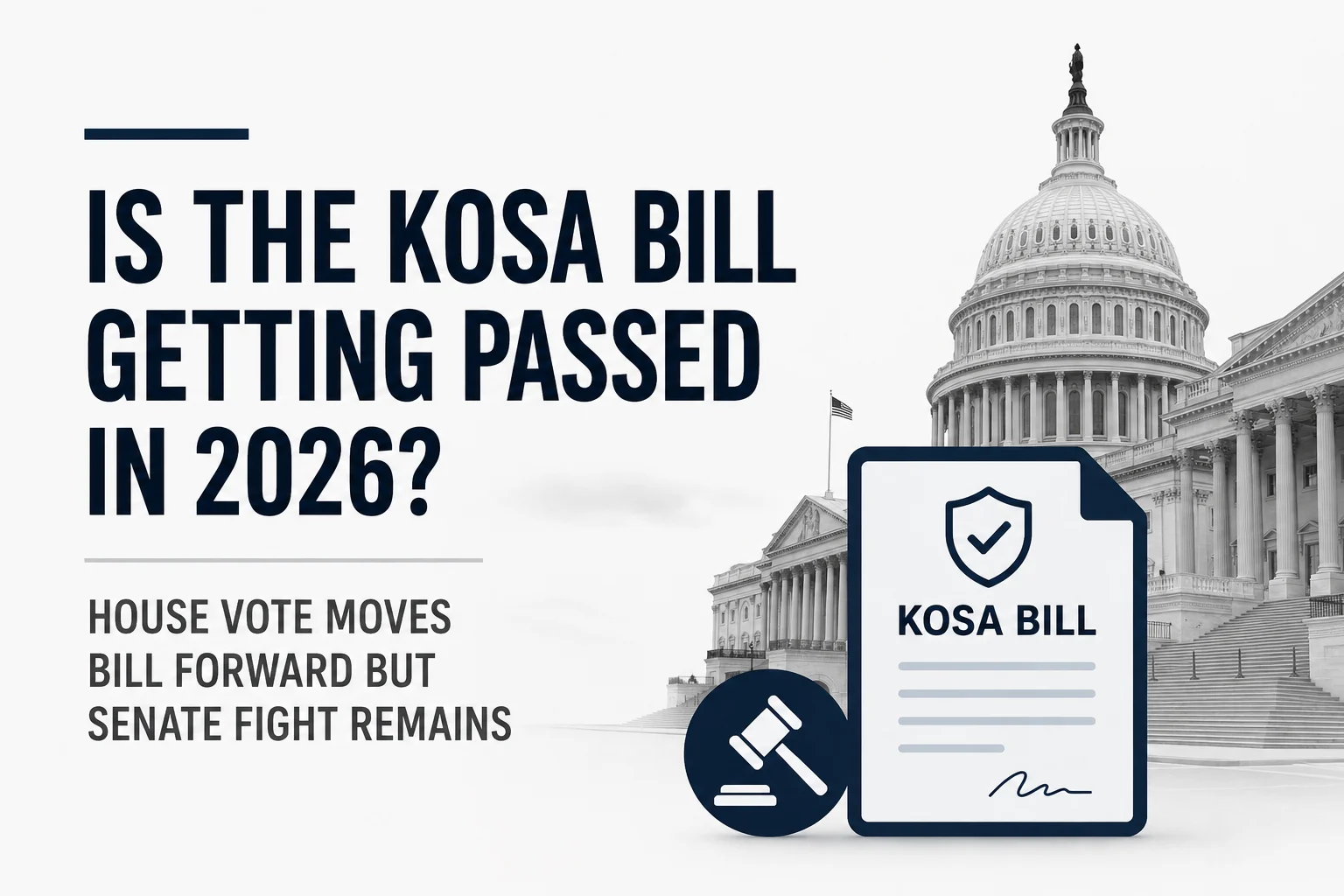
The Kids Online Safety Act moves forward in Congress in 2026, but it does not become law yet.
The House passes the Kids Internet and Digital Safety Act on June 29, 2026. The vote is 267-117. The package includes parts of KOSA and other online safety rules for children. The House vote gives the bill new momentum. But it also creates a clash with the Senate.
The Senate already passes a stronger version of KOSA in 2024 by a 91-3 vote. That version includes a legal “duty of care” rule for online platforms. The House version does not match the Senate version. That difference now becomes the biggest problem.
So the short answer is clear. KOSA is not passed into law yet. The House takes a major step. But the Senate still controls the next step.
Also Read: Trump Housing Bill Dispute
Parents, schools, child safety groups, and tech companies all watch KOSA closely.
The bill targets online harms that affect children and teenagers. Supporters say social media platforms use design features that keep kids scrolling. They also say platforms do not do enough to protect minors from sexual abuse, bullying, eating disorder content, and addictive tools.
KOSA supporters want tech companies to offer stronger safety controls. They also want platforms to give minors and parents more options. The House bill requires online platforms to offer ways for kids to limit addictive features. It also requires policies to protect children from some harms, including sexual exploitation.
This issue gains power because many families feel that social media companies move too slowly. They see Congress as the only way to force change.
The House vote looks big. But it does not mean the bill becomes law. The House passes its own version. The Senate has a different view. That means lawmakers must settle the differences before any final bill can reach the president.
Axios reports that key senators say the House version has little chance in its current form. The report says the vote sets up a clash between the House and Senate over how strong the rules should be.
This is the main reason KOSA still faces doubt in 2026. Congress can support the idea of child online safety and still fight over the details. That is what happens now.
Also Read: Student Loan Repayment FAFSA Update
The main difference is the “duty of care” rule.
The Senate version places a legal duty on social media companies to protect young users from certain harms. The House version uses a weaker structure. It focuses more on tools, design limits, and safety policies.
Senators Richard Blumenthal and Maria Cantwell criticize the House version. They say it removes key protections from the Senate bill. Senate Democrats argue that the House package does not go far enough.
This makes the fight simple.
The House says it passes a workable child safety package. Some Senate supporters say the House weakens KOSA too much.
That gap decides whether KOSA moves fast or stalls again.
The “duty of care” rule matters because it changes legal pressure on tech companies.
A normal safety tool tells platforms to give users options. A duty of care tells platforms that they must design services with child safety in mind. That can affect feeds, notifications, autoplay, infinite scroll, filters, and other features.
Supporters say this rule is the heart of KOSA. They say platforms need direct legal pressure. Without that pressure, companies may keep harmful design systems and only add small safety tools.
Tech companies and civil rights groups worry about the same rule for different reasons. Tech companies may face more lawsuits and more compliance costs. Free speech groups worry that platforms may remove lawful content to avoid risk.
That is why this one phrase creates the largest fight.
KOSA does not only face tech industry pressure. It also faces civil liberties pressure.
The Electronic Frontier Foundation argues that the KIDS Act can require age checks to get online. The group says this can hurt privacy because websites may need to verify a user’s age before allowing access.
Critics also say broad child safety laws can push platforms to block sensitive content. This can include mental health content, LGBTQ content, sexual health content, and political content.
Supporters reject that fear. They say the bill targets design harm and platform conduct, not normal speech.
This debate makes KOSA harder to pass. It attracts support from parents and safety groups. It also draws opposition from digital rights groups that normally support stronger tech rules.
Big tech companies watch KOSA because it can change how platforms design products for minors.
Reuters reports that Meta lobbies Congress for protection from child-harm lawsuits tied to social media products. The report says Meta offers to drop opposition to KOSA if Congress adds legal shield language. Critics say that could block parents and schools from holding companies accountable under state law.
This is one of the most important details many reports miss.
The fight is not only about child safety. It is also about legal risk. Tech companies want one national standard. Many state officials and parent groups want to keep state lawsuits alive.
That fight can decide the final shape of the bill.
The House package includes online safety rules for minors.
It requires platforms to offer safeguards. It covers design features that may keep kids online for too long. It also requires companies to address some child harms.
The package also links KOSA with other internet safety and age-related rules. That makes the bill larger than the old KOSA debate.
This creates a unique problem. A bigger package can attract more support. But it can also attract more opposition. Lawmakers may support child safety but oppose age checks. Others may support age checks but oppose state law limits.
So the House vote is a win for momentum. It is not a clean final answer.
The Senate now has several choices.
It can accept the House bill. That looks unlikely right now.
It can change the House bill and send back a stronger version. That may keep talks alive.
It can hold the bill while senators negotiate with the House and the White House. That may slow the process.
Senate Commerce Chair Ted Cruz works on the Senate response. Axios reports that White House pressure also shapes the talks around online safety and state AI law limits.
This creates a larger trade. KOSA may move with AI preemption talks. That means lawmakers may connect child safety rules with limits on state AI laws.
That is a major angle many quick reports miss. KOSA may not pass only on its own child safety merits. It may become part of a wider tech policy bargain.
KOSA still has a real chance in 2026.
The issue has bipartisan support. The Senate passed a strong version in 2024. The House now passes a package in 2026. Parents and child safety groups keep pressure on lawmakers. Some tech companies also prefer one federal law over many state laws.
Those factors help the bill.
The White House also wants Congress to reach a deal on online safety and tech rules. That gives lawmakers a reason to keep talking.
The path is not closed. But the final version may not look like the original Senate KOSA.
KOSA can still fail because the coalition is fragile.
Some Democrats say the House version is too weak. Some Republicans worry about censorship. Civil liberties groups warn about age checks. Tech companies want legal shields. State officials may resist federal preemption.
Each group wants a different bill. That is why Congress fails on KOSA before. The topic sounds simple. The text is not simple.
Everyone says they want kids safer online. But lawmakers do not agree on who enforces the rules, what platforms must remove, how age checks work, and how much power states should keep.
That same conflict remains in 2026.
Parents should not treat KOSA as law yet.
The House vote does not create new national rules today. Platforms do not change overnight because of the June 29 vote. The bill must still survive Senate talks and reach the president.
Parents should also know that the final version can change. The strongest Senate version may not become the final law. The weaker House version may not become the final law either.
The practical point is simple. KOSA moves closer than before, but it still faces a serious Senate fight.
Tech platforms should watch the Senate language.
The final bill may decide how platforms handle teen accounts, algorithm settings, parental tools, age checks, notifications, autoplay, and harmful content policies.
The most important business issue is legal exposure. If Congress adds broad legal shield language, platforms gain protection. If Congress keeps strong duty of care rules, platforms face more risk.
That is why this bill matters far beyond politics. It can change product design and legal strategy for major online platforms.
The next stage is negotiation. Lawmakers must decide if they want a stronger child safety bill or a bill that can pass quickly. They must decide how much power states keep. They must decide whether platforms face lawsuits. They must decide if age checks become part of the national online safety model.
This is why the question “Is KOSA getting passed in 2026?” has a careful answer.
KOSA is closer than it was before the House vote. But it is not law. The House passes a package. The Senate now decides whether to accept it, rewrite it, or block it.
For now, the safest headline is this: KOSA moves forward in 2026, but it still does not cross the finish line.