Trump Housing Bill Dispute
 Rahul Patel
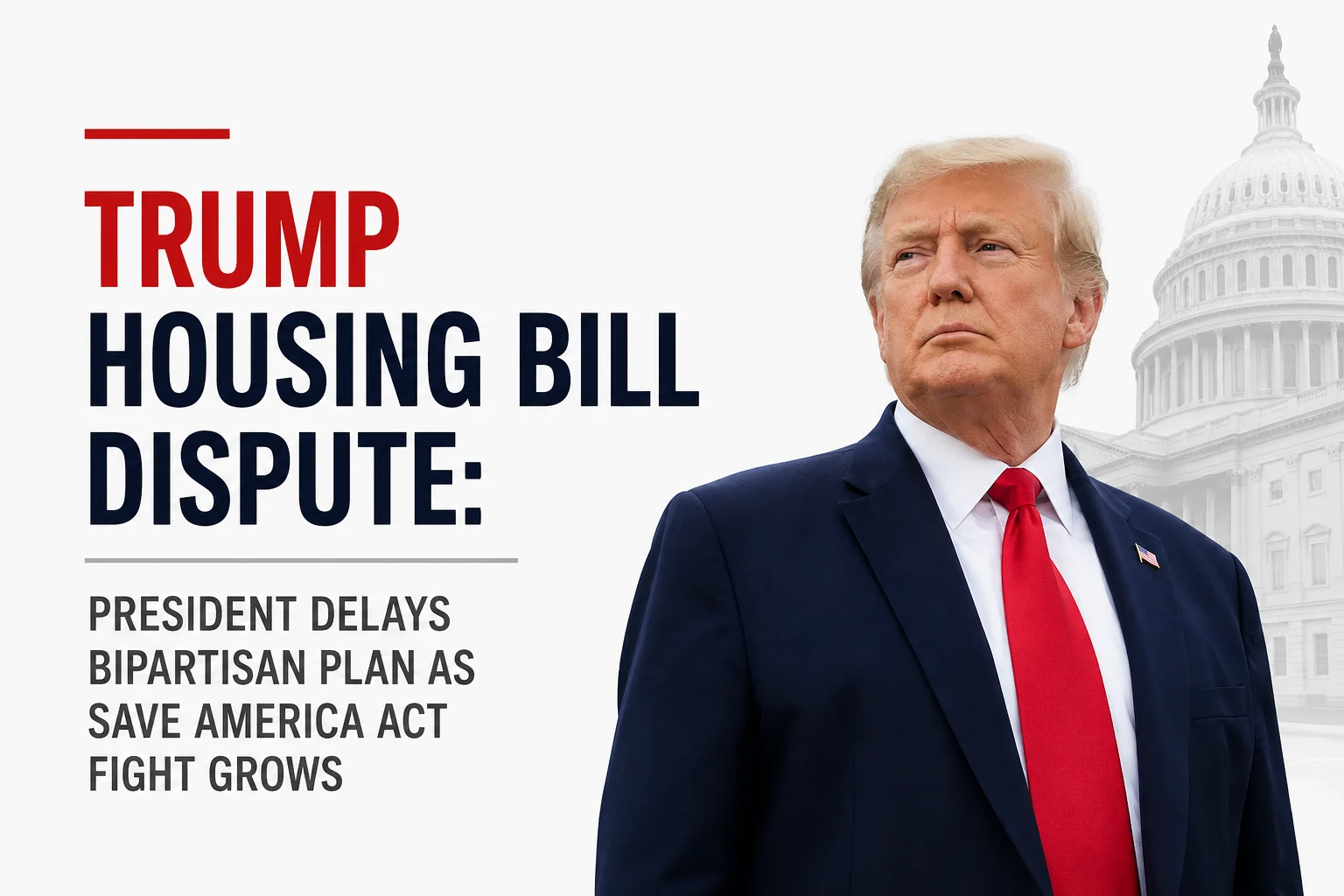
President Donald Trump creates new uncertainty around a major housing bill. The bill is called the 21st Century ROAD to Housing Act. Congress passes it with strong support from both parties. The Senate passes it 85-5. The House passes it 358-32. That level of support is rare in Washington.
The bill now sits at the center of a larger fight. Trump wants Congress to pass the SAVE America Act first. That bill focuses on voter registration rules. It requires proof of citizenship to register to vote. It also creates a national voter database from state records.
Trump calls the housing bill “a big yawn” when he compares it with the SAVE America Act. He says he has not decided if he will sign the housing bill.
This turns a housing bill into a political pressure point.
Also Read: Student Loan Repayment FAFSA Update: July 1 Changes Bring New Rules For Borrowers And Families
The housing bill aims to increase housing supply. It includes steps to speed up some environmental reviews. It also supports housing grants. It changes rules for manufactured homes and prefabricated housing. It also includes limits on some large investors that buy single-family homes.
The bill does not solve the housing crisis in one move. It gives federal agencies and local governments more tools. It tries to make it easier to build homes, fix homes, and finance smaller homes.
The Bipartisan Policy Center says the final bill includes many housing ideas from both parties. It also says the bill includes provisions on housing supply, community banks, manufactured homes, rental housing, rural housing, and disaster recovery.
This is why both parties support it. Democrats see help for renters and low-income families. Republicans see fewer barriers for builders and lenders.
Trump cancels a planned signing event for the housing bill.
He says he wants Congress to pass the SAVE America Act first. Reuters reports that Trump cancels the signing and says the housing event is off until the voting bill passes.
This move shocks some lawmakers because the housing bill already passes by large margins. The bill also appears hard to block because it has enough support to survive a normal veto fight.
House Speaker Mike Johnson sends the bill to Trump’s desk. Reuters reports that Trump has 10 days, excluding Sundays, to sign it or send it back to Congress. If he takes no action, the bill becomes law without his signature.
That detail matters. Trump can delay the ceremony. He can criticize the bill. But he may not stop the bill unless he uses a veto.
The SAVE America Act is the real reason for the dispute.
Trump wants stricter voter registration rules. He wants proof of citizenship for voter registration. He also wants a national voter database.
Some Republicans support Trump’s push. They say election rules need stronger checks. Other Republicans worry that tying housing to the voting bill creates a political mess.
The housing bill has support from Democrats and Republicans. The SAVE America Act faces a harder path. That creates the pressure move. Trump uses a popular housing bill to push a more disputed election bill.
This is the key issue in the dispute. The argument is not only about housing policy. It is about leverage.
The housing fight comes at a hard time for American families.
Harvard’s Joint Center for Housing Studies reports that 22.7 million renter households spend more than 30% of income on housing. It also says 12.1 million renter households spend more than half of income on housing.
Homeowners also face pressure. Harvard says 20.7 million homeowner households spend more than 30% of income on housing in 2024.
These numbers show why the bill gets attention. Rent takes too much money from many families. Mortgage costs also stay high for many buyers.
The bill does not cut prices overnight. But it tries to attack the supply problem. More homes can help slow price pressure over time.
The delay hurts because housing policy already moves slowly. Builders need time. Cities need time. Banks need time. Families cannot wait years for every step.
Many reports frame this as Trump versus a housing bill.
That view is too simple.
The bigger story is timing. The housing bill works through slow tools. It needs agencies to write rules. It needs local governments to use grants. It needs builders and lenders to respond. A delay may not change one rent bill tomorrow. But it can slow the next step in a long process.
Most reports also miss that the bill is not a giant blank-check spending plan. The Bipartisan Policy Center notes that the bill states no extra funds are authorized to carry it out.
That detail changes the debate. Critics call it big government. Supporters call it practical reform. But the bill mostly works through rule changes, program changes, and targeted housing tools.
Another missed point is the investor rule. The bill does restrict large institutional investors that own at least 350 single-family homes from buying some new single-family homes. But it also includes exemptions, including for build-to-rent homes.
So it is not a full ban on all large rental-home activity. It is a narrower rule.
The bill covers many housing issues.
It directs HUD to issue guidance for certain apartment buildings with one internal stairway. This can help some cities allow more small apartment buildings.
It creates a database of public land that local governments own. This can help communities see which unused land may support housing.
It allows a pilot program for FHA-backed mortgages under $100,000. This can help buyers in lower-cost areas where small mortgages are hard to get.
It also changes manufactured housing rules. The bill removes the permanent chassis rule for manufactured homes. It also supports modular housing review and increases some loan limits for manufactured housing.
These details show why the bill gets broad support. It does not rely on one big idea. It uses many smaller ideas to push more housing supply.
Builders care because delays and rules can raise costs.
The bill gives HUD and local governments tools to speed housing approvals. It also supports pre-reviewed housing designs like accessory dwelling units, duplexes, and townhouses.
That may help smaller builders. A smaller builder often cannot spend years fighting rules. A faster path can make a project possible.
But the bill still depends on local action. Federal rules can help. Local zoning still matters. Local permits still matter. Local politics still matters.
That is another view competitors often miss. Washington can open doors. Cities and counties still decide how many homes get built.
Renters should watch because the bill includes more than homebuyer rules.
The bill lifts the Rental Assistance Demonstration cap by 100,000 units. It also extends protections for tenants in those buildings.
It also creates a renter outreach resource for tenants who live in homes owned by large institutional investors.
This does not mean every renter gets cheaper rent. But it does show that the bill touches renters and buyers.
The bill also supports home repair programs. That can matter for older homes and low-income owners. Repairs can keep families in homes and stop properties from falling out of the housing supply.
Trump’s move gives Democrats a simple attack line.
They can say Trump delays housing help while families face high rent and high home prices. The “big yawn” phrase also gives critics a strong sound bite.
Republicans face a more difficult message. Many GOP lawmakers support the housing bill. Some also support the SAVE America Act. But the fight forces them to explain why one bill must wait for the other.
That creates a political risk before the midterm elections. Housing costs remain a top daily issue for many voters. Voter registration rules matter to the Republican base. But rent and mortgage costs hit people every month.
This is why the dispute becomes larger than one bill.
Trump now has a few choices.
He can sign the bill. He can veto it. He can also take no action and let it become law after the 10-day period, excluding Sundays. Reuters reports that the bill becomes law without his signature if he does not return it in that window.
A veto looks risky because the bill passes both chambers by wide margins. Congress may have enough votes to override it.
A signature lets Trump claim credit for a bipartisan housing win. But it may weaken his pressure campaign for the SAVE America Act.
Doing nothing gives him a middle path. It lets the bill become law without a public signing. But critics may still say he delays action on housing.
The Trump housing bill dispute shows how housing now sits at the center of national politics.
For years, housing policy often stays local. City councils fight over zoning. States debate rent rules. Builders fight permit delays. Banks decide lending rules.
Now the federal fight shows a bigger shift. Housing is no longer a side issue. It is a voter issue. It is a family budget issue. It is also a political bargaining tool.
The bill may still become law. But the dispute leaves a clear message. In 2026, housing policy can pass Congress with rare support and still face a fight at the White House.
That is the main lesson from this dispute. America’s housing problem is urgent. But Washington still treats even popular housing reform as part of a larger political trade.