Tim Ream VAR Mistaken Identity: First In World Cup History
 American News Desk Editorial Team
The United States had already built a comfortable lead at SoFi Stadium on Friday night. The USA was up 3-0 against Paraguay when something happened in the 53rd minute that nobody in that stadium and nobody in World Cup history had ever seen before. Referee Danny Makkelie stopped play. The VAR review was for mistaken identity. Then Tim Ream got his yellow card taken away and handed to the player who faked the foul to earn it. The USA went on to win 4-1. But it was the sequence in the 53rd minute, not any of the four goals, that people were still talking about long after the final whistle.
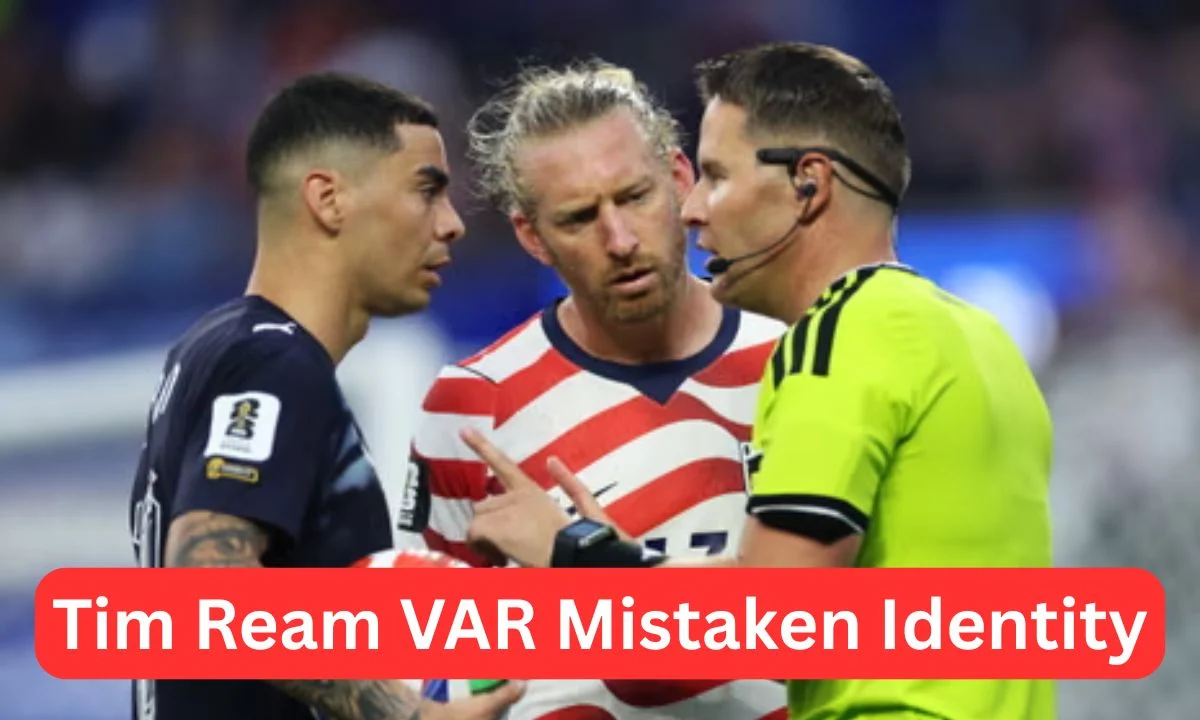
USA captain Tim Ream chased Paraguay winger Miguel Almirón toward the American byline. Almirón went to ground hard, as if Ream had clattered into him. Dutch referee Danny Makkelie saw a foul and immediately showed Ream a yellow card.
Ream protested right away. Replays confirmed he was right to be upset. Slow-motion footage showed no contact between the two players. None. Almirón had dived committing what soccer calls simulation.
That is where VAR stepped in. Video assistant referee Carlos Del Cerro Grande sent Makkelie to the pitchside monitor. The referee reviewed the footage. He then did something that had never been done at a World Cup before. He walked over to Ream, rescinded the yellow card, walked over to Almirón, and booked him instead for simulation. The crowd at SoFi Stadium erupted.
This confused many fans in real time. The name does not quite describe what happened. In its traditional form, mistaken identity refers to a case where the referee books the wrong player entirely. For example, during a crowded play where Player A gets the card that should have gone to Player B.
What happened with Ream and Almirón is different.
In early 2026, IFAB enacted a rule amendment allowing VAR to intervene when a player receives a yellow or red card, but the offense was actually committed by another player. The key phrase is “another player.” In this case, no foul was committed at all. But Almirón’s deception caused the card to be given to Ream. That qualifies under the new protocol.
To be clear about what VAR can and cannot normally do: VAR reviews at the World Cup are restricted to four things — goals, penalties, red cards, and mistaken identity. Yellow cards are explicitly off limits. This new rule created a specific, narrow exception. A yellow card can now be overturned only when it was given to the wrong player because of deception or misidentification. Without that exception, Ream keeps his yellow and Almirón walks away clean.
Ream did not just avoid the inconvenience of a yellow card. He avoided a situation that could have altered the rest of his World Cup.
At this tournament, yellow cards accumulate across the group stage. Two yellows during the group stage means a one-game suspension. Ream entered the Paraguay match with zero yellow cards. The rescinded card kept his record clean.
Ream is 38 years old. He is already the oldest player in the history of the United States men’s national team to appear at a World Cup. Every game he plays at this tournament is historic. Having to serve a suspension would have meant missing part of this moment.
Without the yellow, Ream enters the USA’s next group stage match against Australia on June 19 with a clean slate. With it, he would have been one booking away from sitting out a game in his final World Cup.
His USA teammate Tyler Adams was not as fortunate. Adams picked up a legitimate yellow card in the second half and will enter the Australia game already carrying a card.
One question remains unanswered. True mistaken identity means the referee looked at the wrong player and booked them by accident. That is not what happened against Paraguay. Makkelie knew exactly who he was booking. He just misjudged whether there was contact. That is a factual error about the incident itself, not an identity error.
Some analysts call Friday’s use of the rule a stretch of the original intent. Others argue the outcome was right regardless of the label. Almirón dived. Ream did nothing wrong. The replay showed it in seconds.
What almost nobody debates is that the outcome was the right one. The only open question is whether IFAB needs a second, clearer rule category for simulation-induced card errors.
Long before Friday night’s VAR drama, Tim Ream was already carrying a remarkable story into this tournament.
The 38-year-old defender from St. Louis was seen as a bridge player when the USA’s 2026 World Cup cycle began. He was not supposed to still be here. A vocal section of the soccer media spent years trying to write him out of the squad.
Ream kept playing his way back in. He led the USMNT in minutes played through the 2025-26 cycle. He wore the captain’s armband in all ten of his starting appearances. Head coach Mauricio Pochettino kept picking him.
The moment the opening whistle blew against Paraguay, he became the oldest player in USMNT World Cup history. Fifty-three minutes later, his name was attached to the first-ever mistaken identity VAR intervention at the World Cup. If this is indeed Ream’s final tournament, he is making sure it is one people remember.
Friday night may be just the beginning of the mistaken identity protocol making news at this tournament.
The rule is specifically designed to deter simulation. Almirón’s booking for diving sends a clear signal to every player in the remaining 63 games. If you dive convincingly enough to get an opponent carded, VAR now has a mechanism to catch it, flip the card, and give it to you instead.
That does not mean it will be applied consistently. The rule requires the referee to have already issued a card to trigger the review process. A clean, unpunished dive does not activate the protocol. Critics point out that this creates an odd incentive structure. The rule only works when the referee already made one mistake.
But for now, the precedent is set. The rule exists, it has been used, and it worked exactly the way its designers intended.
What is the VAR mistaken identity rule?
Answer: It is a rule enacted by IFAB in early 2026 that allows VAR to intervene when a yellow or red card is given to the wrong player. In this case, it was used because Almirón’s dive caused Ream to be carded unfairly.
Can VAR normally overturn yellow cards?
Answer: No. Standard VAR reviews at the World Cup are limited to goals, penalties, and red cards. The mistaken identity provision is a specific, narrow exception that made overturning Ream’s yellow card possible.
What happened to Almirón after the review?
Answer: Almirón received the yellow card that was rescinded from Ream. The card was issued for simulation — the soccer term for faking a foul.
How did the USA perform overall against Paraguay?
Answer: The USA won 4-1. Paraguay scored an own goal to open the scoring. Folarin Balogun scored twice, and the USMNT added a fourth before the match ended.
What is Tim Ream’s status going into the Australia match?
Answer: Ream enters the June 19 match against Australia with a clean card record after the yellow was rescinded. He is free to play without suspension risk.