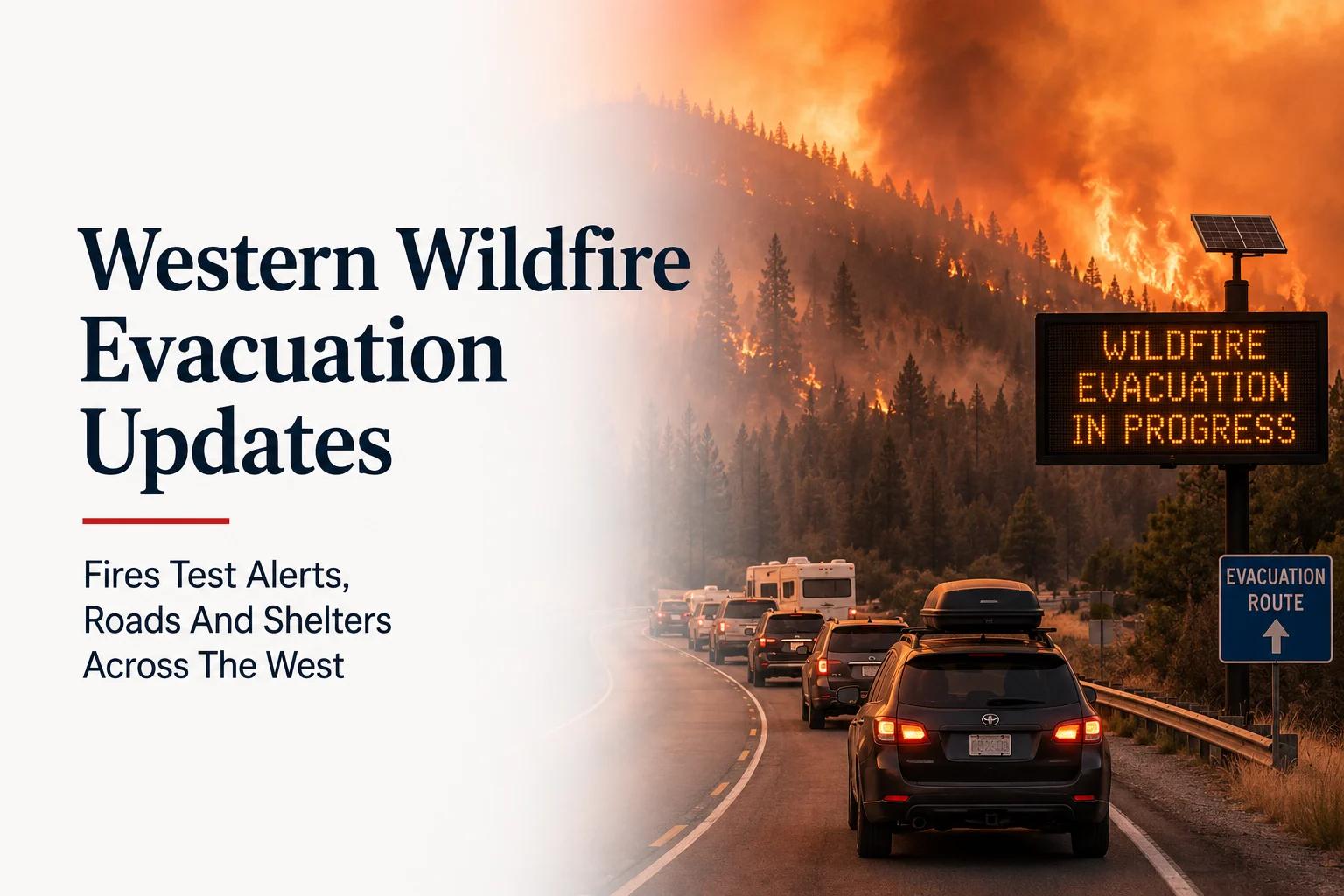
Western Wildfire Evacuation Updates: Fires Test Alerts, Roads And Shelters Across The West
 AND Editorial Team
Western wildfire evacuation plans face a hard test in July 2026. The National Interagency Coordination Center lists 37 large fires across the U.S. on July 8. It also lists 37,783 year-to-date wildfires and 3,420,025 acres burned so far this year. The national preparedness level stands at Level 4. This shows heavy demand for fire crews, aircraft, shelters, and emergency managers.
NIFC says 167 new fires were reported nationwide in one day. It also says firefighters work to contain 37 large fires. NIFC says current fires have burned 146% of the 10-year average acreage for this time of year. This makes evacuation planning more urgent. A fast fire can block roads before many people leave.
The data gives a clear picture.
| Wildfire Evacuation Data Point | Number |
|---|---|
| Large U.S. fires listed by NICC on July 8, 2026 | 37 |
| U.S. wildfires so far in 2026 | 37,783 |
| U.S. acres burned so far in 2026 | 3,420,025 acres |
| Acres burned on large active fires | 732,037 acres |
| Personnel assigned to wildfires | 11,829 |
| Current national preparedness level | Level 4 |
This section can become a simple infographic. Use a fire icon for each number. Add a map of the West. Add one callout that says: “Evacuation planning starts before the alert.”
Colorado is one of the main evacuation points. The Red Cross says the Aspen Acres Fire west of Rye burns more than 91,000 acres. It says the fire forces families in Pueblo and Custer counties to evacuate. It also says the fire is 12% contained in its July 7 update.
Red Cross workers open shelters and a disaster assistance center in Pueblo. This matters because evacuation does not end when people leave home. Families still need beds, medicine, phone charging, pet support, and clear return rules.
Colorado also faces other fires. The Red Cross lists the Gold Mountain Fire at more than 27,600 acres and 3% containment. It lists the Ferris Fire at almost 48,000 acres and 21% containment. It lists the Willow Fire at almost 4,000 acres and 1% containment.
Utah now carries a major fire burden. NIFC says the Babylon Fire southwest of Monticello is the largest fire in the country on July 8. It lists the fire at 100,479 acres.
This number matters for evacuation planning. Large fires can change direction with wind. They can also stretch crews across long distances. Residents near fire zones need more than one exit plan.
Evacuation alerts now create a second risk. Some residents receive wrong alerts. Some receive alerts for distant fires. Some receive alerts too late. These problems create alert fatigue. People may stop trusting warnings when the next real order arrives.
The 2025 Eaton Fire shows why this issue matters. California’s attorney general opens a civil rights investigation into delayed evacuation orders in west Altadena. The Eaton Fire kills 19 people and destroys more than 9,400 structures. AP reports that west Altadena received evacuation orders hours after the east side.
The problem is not only fire size. The problem is also who receives the warning, when they receive it, and whether they can act on it.
Roads are the weak point in many wildfire towns. NIST says small towns may have only one or two major outbound roads. It also says fast wildfires can outrun emergency notices and cut off roads before residents escape.
This is why officials push early leaving. A family that leaves before the final order can avoid gridlock. A family that waits may meet smoke, fallen trees, road closures, and emergency vehicles. Residents should know three routes when possible. They should also know one backup shelter area if every route closes.
NIST updates its wildfire evacuation guidance in 2025. It calls the guidance ESCAPE. The report focuses on no-notice wildfire evacuations at the community level.
One major update is the Temporary Fire Refuge Area. This means a pre-planned open space where people can go if evacuation becomes impossible. NIST says these areas do not replace evacuation. They only raise survival chances when roads fail.
This gives communities a practical step. They should mark refuge areas before fire season. They should add signs, radio details, QR codes, and clear access routes.
Pets and livestock slow evacuation. A family can leave fast with one bag. A ranch cannot move horses, trailers, feed, and gates in a few minutes. This makes animal evacuation a key part of Western wildfire planning.
The Red Cross tells residents to keep pets where they can find them quickly. It also says people should take pets because unsafe conditions for people are also unsafe for animals.
Horse owners need an earlier trigger. They should load trailers before the final evacuation order. They should also keep halters, feed, water buckets, papers, and medicines in one place.
Insurance prep is part of evacuation. Many families think only flames cause damage. Smoke can also damage homes, furniture, clothes, food, and business inventory. Evacuees should take photos before leaving when it is safe. They should keep receipts for hotels, fuel, meals, medicines, and pet boarding.
Wildfire risk also affects housing markets. The Insurance Information Institute lists 1,257,966 California housing units at extreme wildfire risk in 2025. It lists 318,783 in Colorado, 128,007 in Oregon, and 59,585 in Washington.
This creates a strong data graphic. Show “Homes At Extreme Wildfire Risk” by state. Use four bars for California, Colorado, Oregon, and Washington.
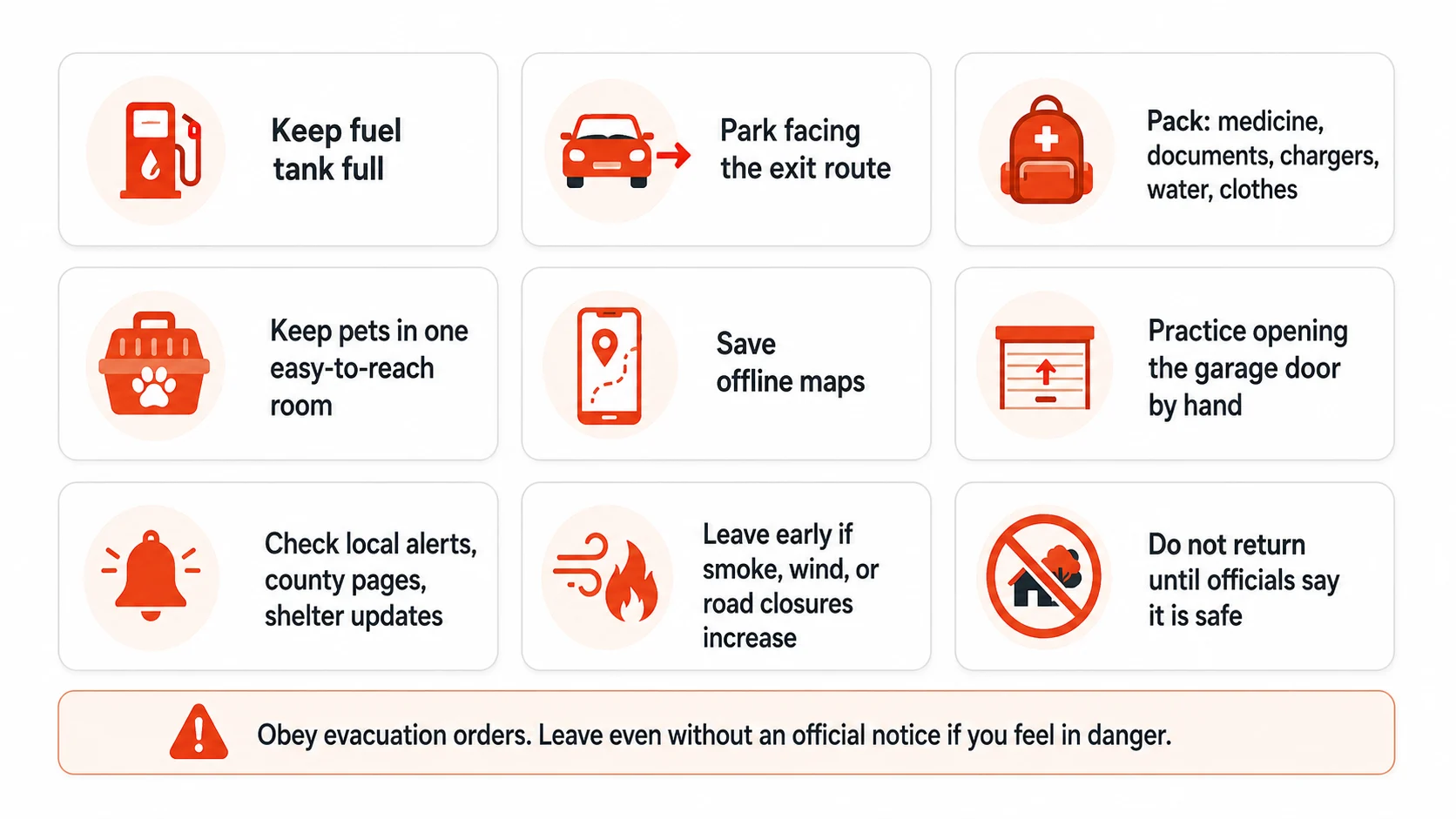
Residents should act before the final order.
The Red Cross says people should obey evacuation orders. It also says people may need to leave even without an official notice if they feel in danger.
Western wildfire evacuation is no longer only about one fire. It is about a system. Alerts must work. Roads must stay open. Shelters must have space. Families must move pets. Older residents need extra help. People without cars need transport.
The latest data shows why this issue needs constant attention. More than 3.42 million U.S. acres have already burned in 2026. National fire activity sits at Preparedness Level 4. Large fires burn across several western states.
The main lesson is simple. Western residents should not wait for the last warning. They should prepare early, leave early, and treat evacuation as a plan, not a panic move.